Ready for action: The KulturGutRetter project trains new CHRU team members
Ready for action: The KulturGutRetter project trains new CHRU team members
The Cultural Heritage Response Unit (CHRU), which was recently registered in the EU Civil Protection Mechanism (UCPM), is training additional team members again this year. These experts in civil protection, disaster management, and cultural heritage can be deployed worldwide to protect cultural assets following natural disasters. To prepare for future missions, nearly 50 team members completed a hands-on training course at the THW Logistics Center in Hilden from May 19 to 22, 2026.
In February 2026, the partners in the KulturGutRetter project—the German Archaeological Institute (DAI), the Leibniz Centre for Archaeology (LEIZA), and the Federal Agency for Technical Relief (THW)—registered the CHRU international deployment unit with the UCPM. This enables Germany to offer targeted support for the preservation of movable and immovable cultural heritage in response to international requests for assistance.
A key objective of the so-called station training is to ensure that all roles within the international deployment unit are filled by multiple personnel through the training of additional CHRU team members — ranging from IT and logistics specialists to team leaders, as well as roles in documentation, damage assessment, and conservation. In the event of a specific deployment, all experts registered with DAI and THW as CHRU team members are contacted at short notice and asked about their availability. Since they participate on a voluntary basis and may have professional or personal commitments, a broad pool of personnel is crucial for rapid operational readiness. Since 2024, 130 CHRU team members have already been trained through annual station-based training sessions. Some participants have since taken on trainer roles themselves and are passing on their experience to new colleagues.
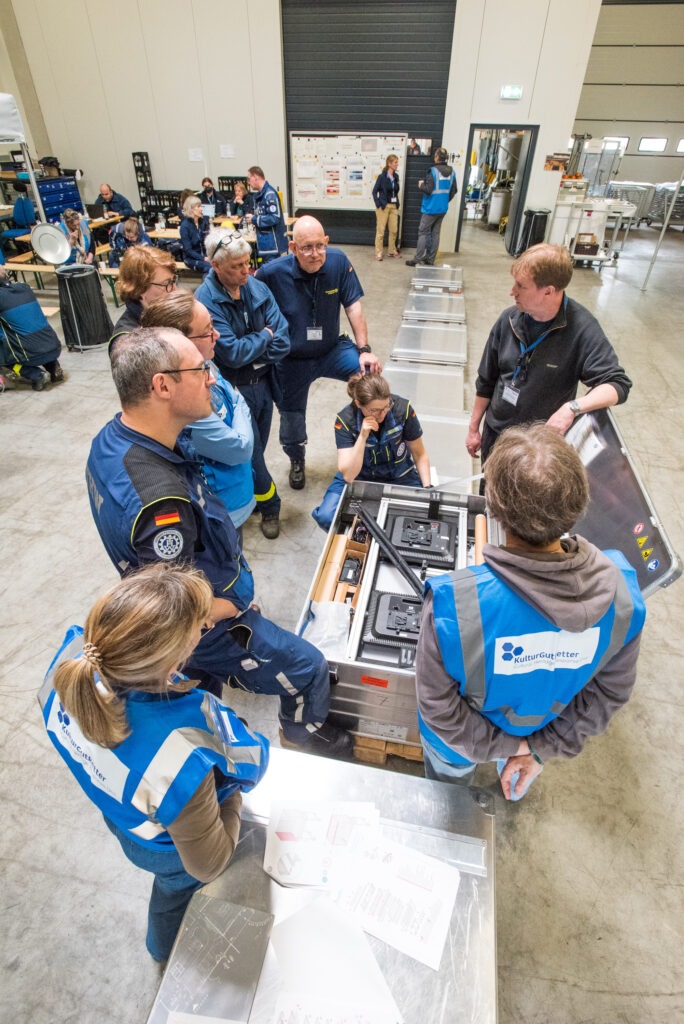
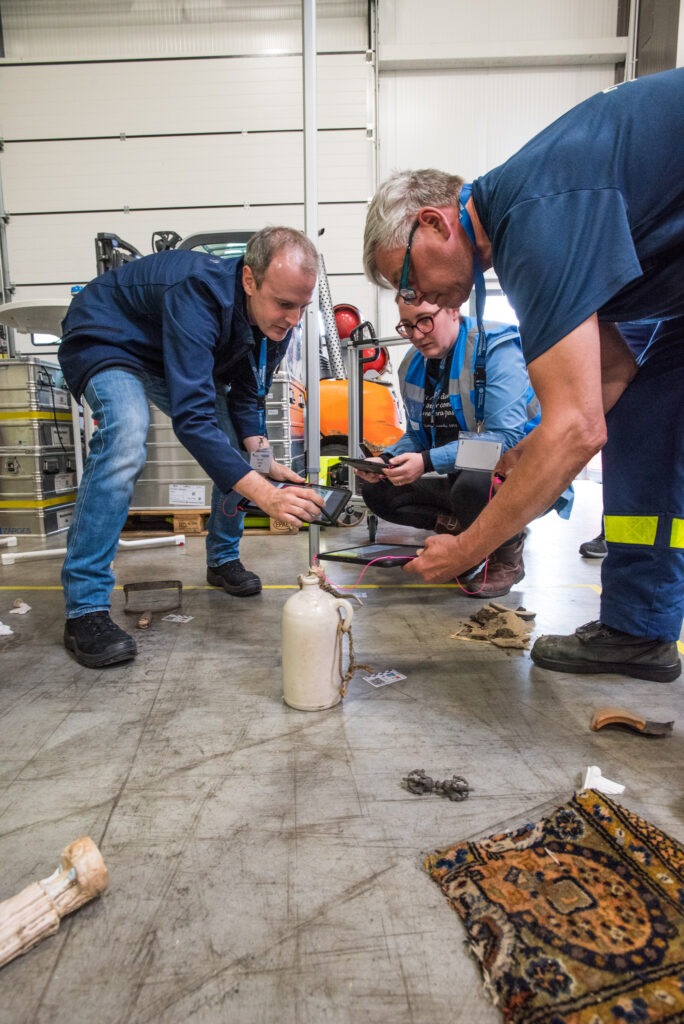
Photos: Setting up the mobile emergency conservation lab / Digitizing movable cultural assets using ID cards and tablets | N. Becker-Kesseler, THW
Familiarization with equipment and operational procedures
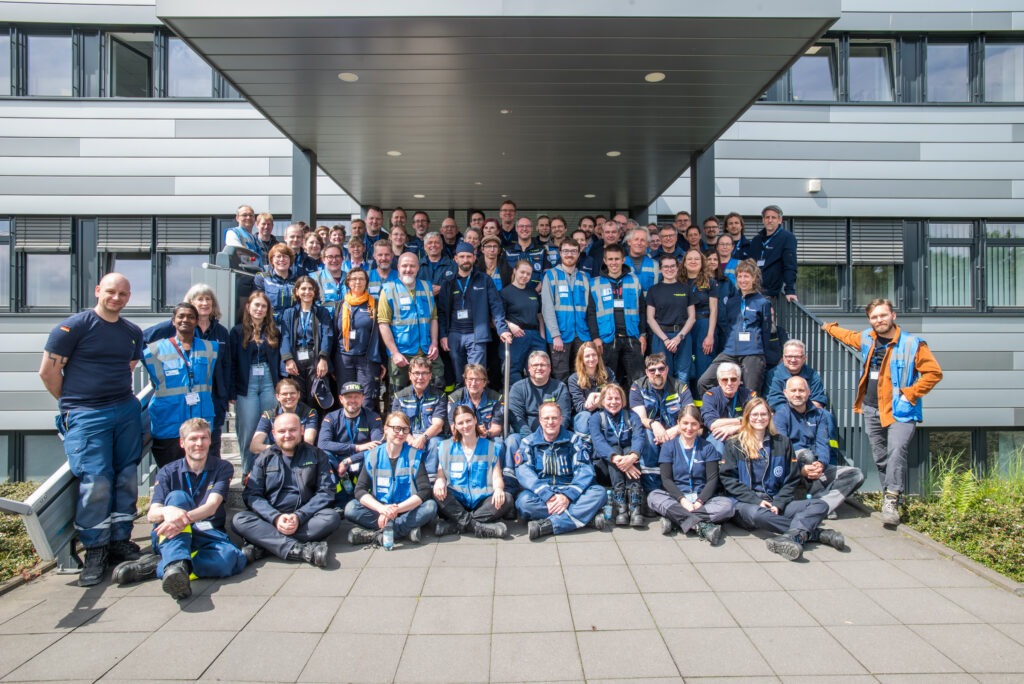
About 50 CHRU team members from the interdisciplinary pool, with varying levels of experience, gathered in Hilden for this year’s four-day training session. The focus was on understanding the roles within the response team, practicing procedures together, and familiarizing themselves with the CHRU’s specialized equipment.
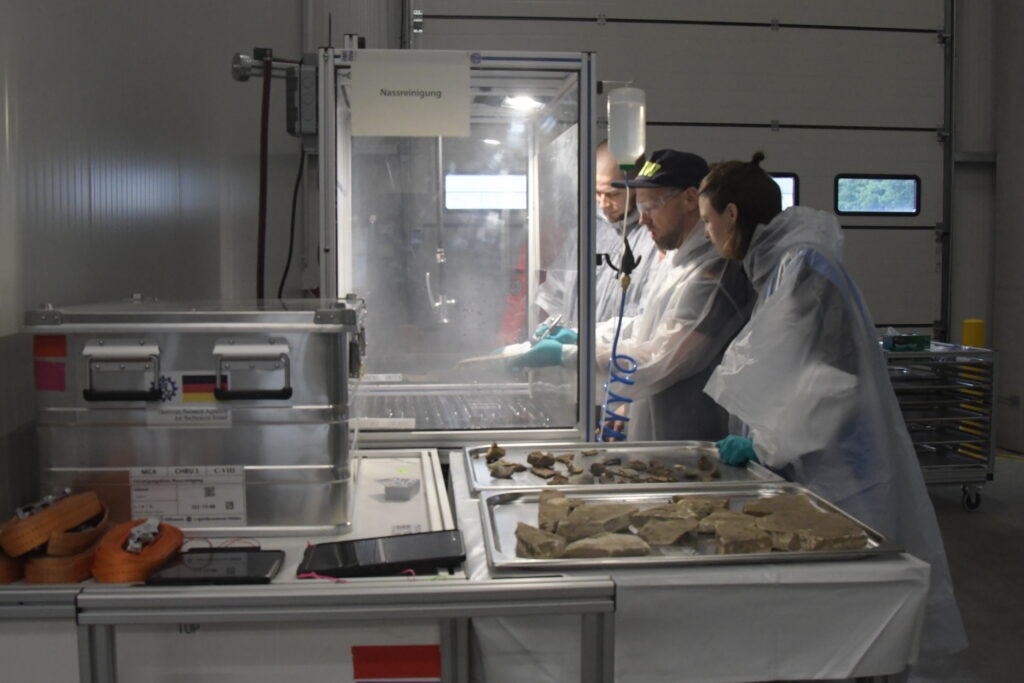
For international missions to assist endangered cultural assets—such as in the aftermath of earthquakes, floods, or fires—the CHRU can be deployed with up to 18 tons of specialized equipment. Some of this material, which is stored at the THW logistics center and kept continuously ready for deployment, was used during the station training. Among other things, the emergency conservation laboratory developed by LEIZA was set up. In this lab, the experts practiced key procedures such as the rapid and systematic documentation, cleaning, and proper packaging of objects made from various materials.
Photo: Wet cleaning of objects in the emergency conservation laboratory | N. Schwartz, DAI
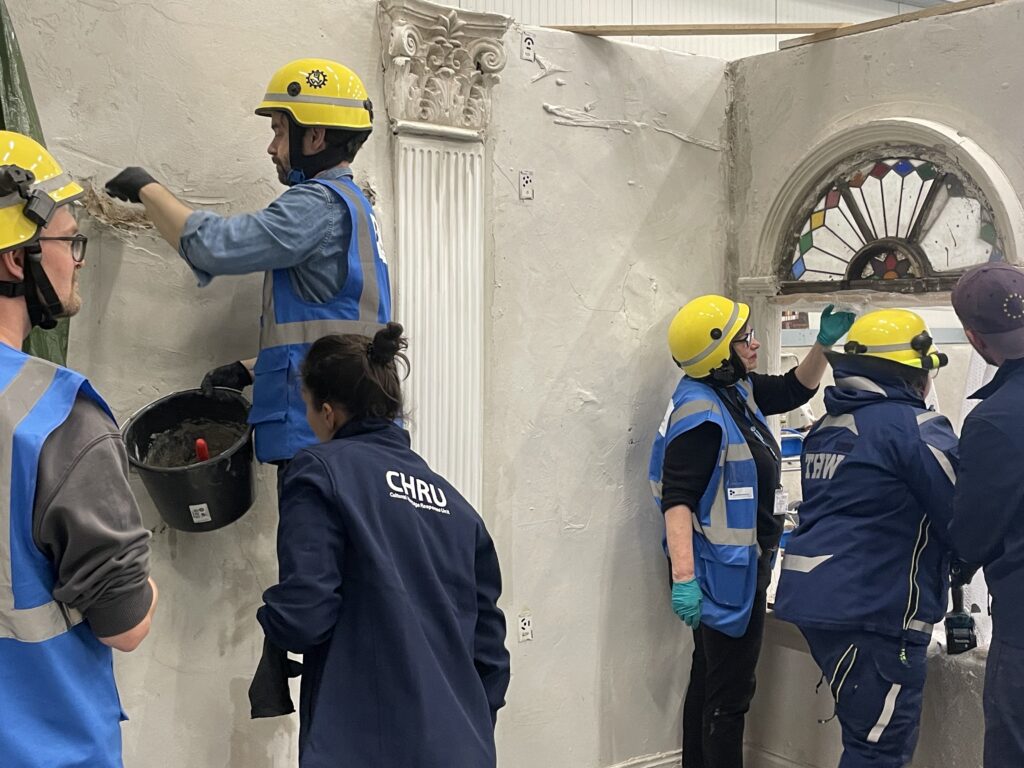
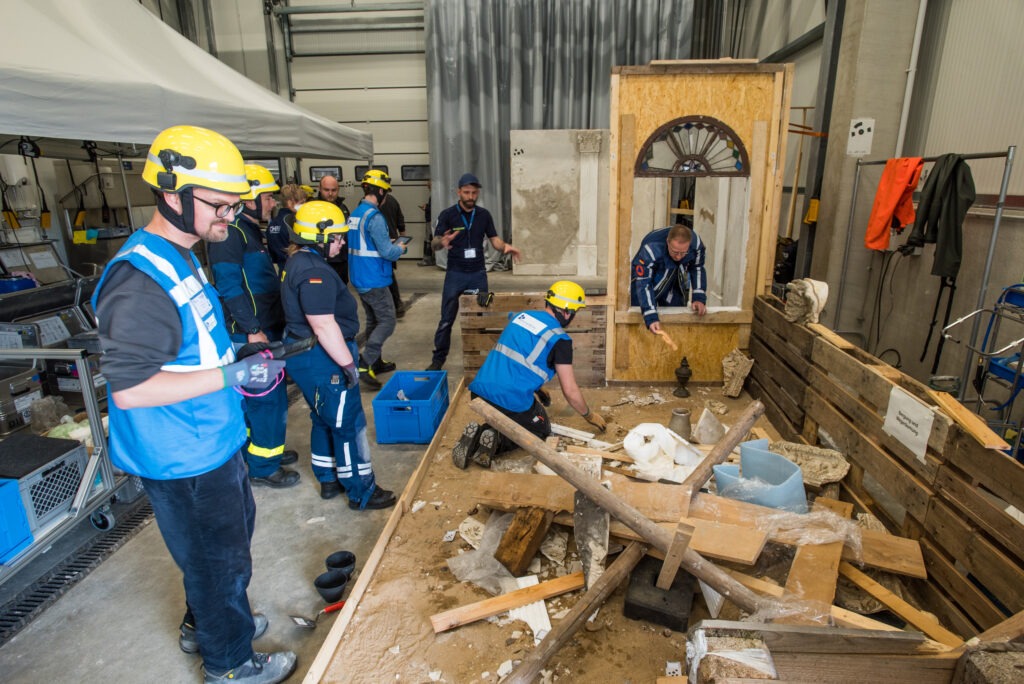
At the same time, team members practiced methods for assessing and securing immovable cultural heritage. Using modern surveying techniques such as tachymetry, Structure from Motion (SfM), 3D laser scanning, and the Global Navigation Satellite System (GNSS), damage was documented, assessed, and appropriate measures were determined. All collected data was integrated into a digital documentation system that facilitates structured collaboration and supports the sharing of information with affected institutions in the event of an emergency.
Photo: Stabilization measures for immovable cultural assets | N. Becker-Kesseler, THW.
Drawing on experience
Even though specific response scenarios can only be predicted to a limited extent, targeted preparation is crucial. The more intensively and regularly team members within the CHRU train together and practice the necessary procedures for protecting cultural property, the more effectively they can respond in an emergency. In such situations, time is of the essence in order to prevent further damage to the affected cultural property as much as possible. Station-based training is therefore an integral part of a multi-component training concept, which is supplemented by online modules, specialized advanced courses, and realistic simulation exercises. All formats are closely tailored to the requirements of civil protection and disaster management as well as to the needs of cultural heritage preservation.
Photo: Rescue scenario | N. Becker-Kesseler, THW
The participants’ experiences and the insights gained from the training sessions are systematically evaluated and incorporated into the ongoing development of training formats as well as the equipment and technology used. In the future, this continuous learning process will also be supplemented by the evaluation of real-world operations in order to continuously strengthen the CHRU’s operational readiness and effectiveness. At the same time, DAI, THW, and LEIZA are engaging with partners at the national, European, and international levels to share their own experiences and learn from other initiatives.