
The Cultural Heritage Response Unit (CHRU), developed by German partners as part of the KulturGutRetter project, has been officially registered in the EU Civil Protection Mechanism since the end of February 2026 and is thus reported as ready for deployment. In response to an international call for assistance, Germany can provide assistance worldwide for the emergency care of threatened cultural heritage, in the event of natural or human-made disasters.
The CHRU is one of the first modules in the European Civil Protection Mechanism (UCPM) to specialize in emergency assistance for damaged or threatened cultural heritage. Similar to already established civil protection units – such as those for rescue operations or water treatment – Germany can offer the CHRU’s support when a country requests international assistance following a disaster. Once the affected country accepts the offer of assistance, the CHRU can be deployed within 96 hours in accordance with EU standards. The unit is usually only deployed once life-saving emergency measures have been completed. At full capacity, the CHRU comprises a 43-member team and 18 tons of equipment, designed for missions lasting at least 10 days.
Working together to preserve cultural heritage
“The Federal Agency for Technical Relief (THW), the Leibniz Centre for Archaeology (LEIZA), and the German Archaeological Institute (DAI) have contributed their specific strengths to the KulturGutRetter project in recent years – ranging from international disaster relief and logistics to the handling of built heritage and the conservation of cultural objects made of various materials, as well as IT infrastructures at the interface between operations and research data management. However, the CHRU relies above all on the great commitment and willingness of the THW emergency responders and the KulturGutRetter volunteers, who will participate in missions together as a team in the future,” emphasizes Tobias Busen, Research Associate for Historic Preservation and Cultural Heritage Conservation at the DAI.
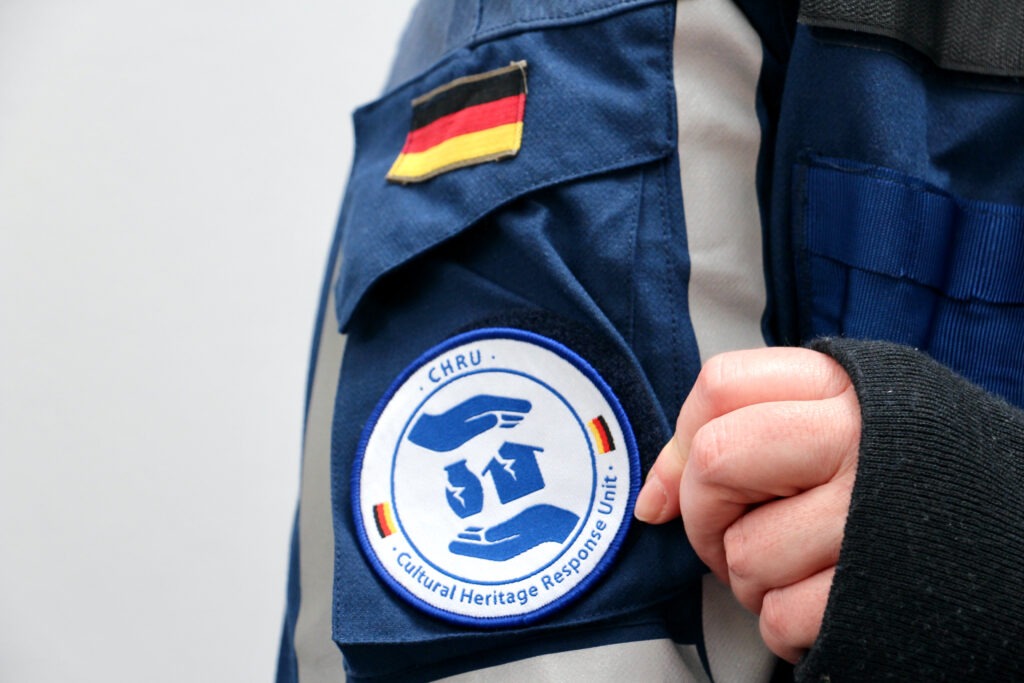
Photo: The CHRU patch, C. Domenech, DAI
Global deployment following disasters
The CHRU brings together experts from civil protection, disaster management, and cultural heritage preservation. The CHRU’s interdisciplinary team secures movable and immovable cultural heritage during international missions: “With the CHRU’s operational readiness, the three partners can make a significant contribution to the protection of cultural heritage worldwide. A self-sufficient concept, specialized equipment, standards, and multi-level training have prepared the unit for these missions. Supported by an interdisciplinary team of volunteers, the CHRU is ready to assist cultural assets in need and, by extension, the communities affected by disasters,” says Alicia Rehberger, an advisor in the THW’s International Operations Working Group. Since 2024, the KulturGutRetter project has been training volunteers and THW personnel for these tasks. During operations, with the support of staff in Germany and in close coordination with local authorities, the CHRU performs tasks such as remote sensing, documentation, evacuation, emergency conservation, and the securing and stabilization of movable and immovable cultural heritage. Once initial response measures are complete, the cultural heritage and collected data are handed over to the relevant local institutions.
To carry out its operations, the CHRU uses specialized equipment for the protection of cultural heritage. For immovable cultural heritage—such as historic buildings or monuments—materials are available for cleaning, decontamination, and object stabilization. For movable cultural property—such as collections—LEIZA has developed a mobile emergency laboratory as part of the KulturGutRetter project: “Thanks to the training and testing conducted in recent years and the minimum standards for handling cultural heritage articulated for these operations, the KulturGutRetter volunteers and response teams are well-equipped to be deployed at any time for cultural heritage protection. In addition, the modules of the emergency lab and the associated equipment for the Mobile Cultural heritage Unit have been revised following several tests and are now ready for emergency situations,” explains Ulrike Lehnert, conservator at LEIZA.
A strong signal for cultural heritage protection
The notification of the CHRU’s operational readiness to the EU marks an important milestone. The further development of the module will continue in 2026 and beyond, particularly through the ongoing training of additional team members. In the coming years, the CHRU is also set to be certified under the EU Civil Protection Mechanism. At the same time, experiences from the unit’s establishment and training will be shared with international partners to facilitate knowledge transfer. The CHRU can thus serve as a model for the development of additional teams in other countries, thereby assuming an even stronger position within European and international disaster and cultural heritage protection.
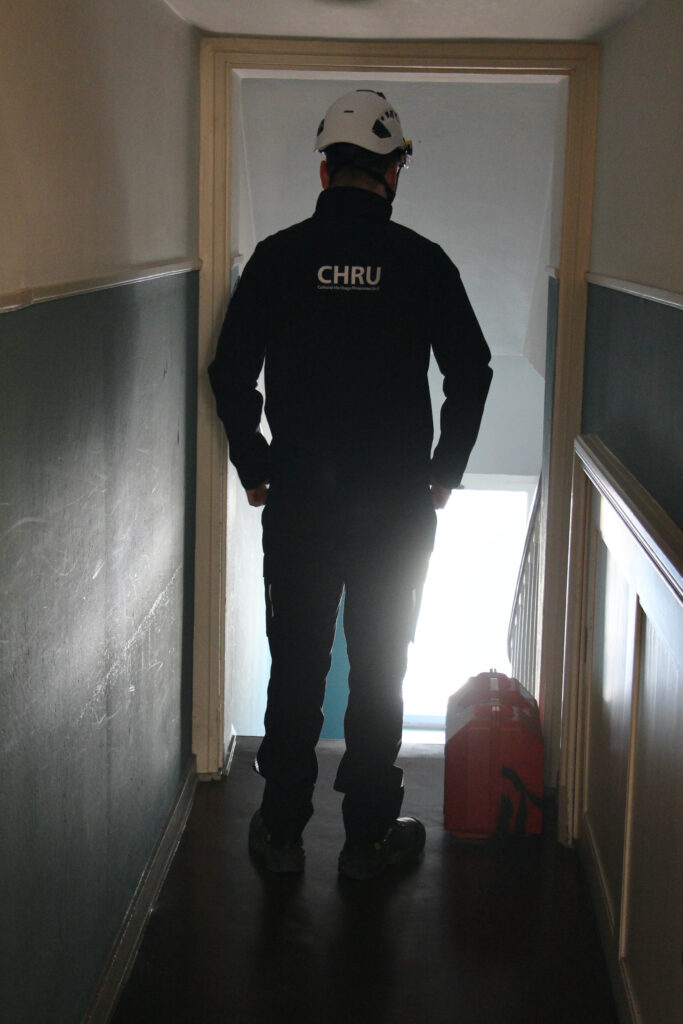
Photo: The CHRU is deployable, C. Domenech, DAI
2 comments
Comments are closed.