Experts in movable and immovable cultural heritage deepen their training
Experts in movable and immovable cultural heritage deepen their training
In 2025, two in-depth specialist workshops were organised for volunteers from the CHRU’s Immovable Cultural Assets (ICA) and Movable Cultural Assets (MCA) units. Participants were encouraged to improve their knowledge of work processes by applying them in practical exercises, while also promoting teamwork.
ICA specialist training in Prignitz
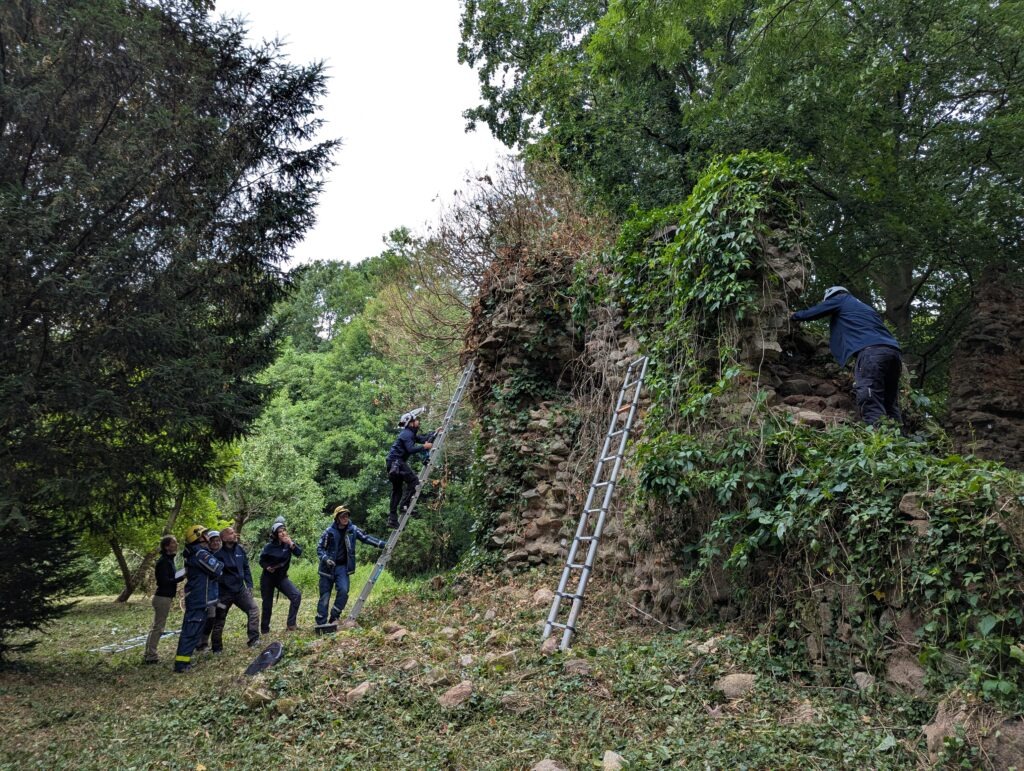
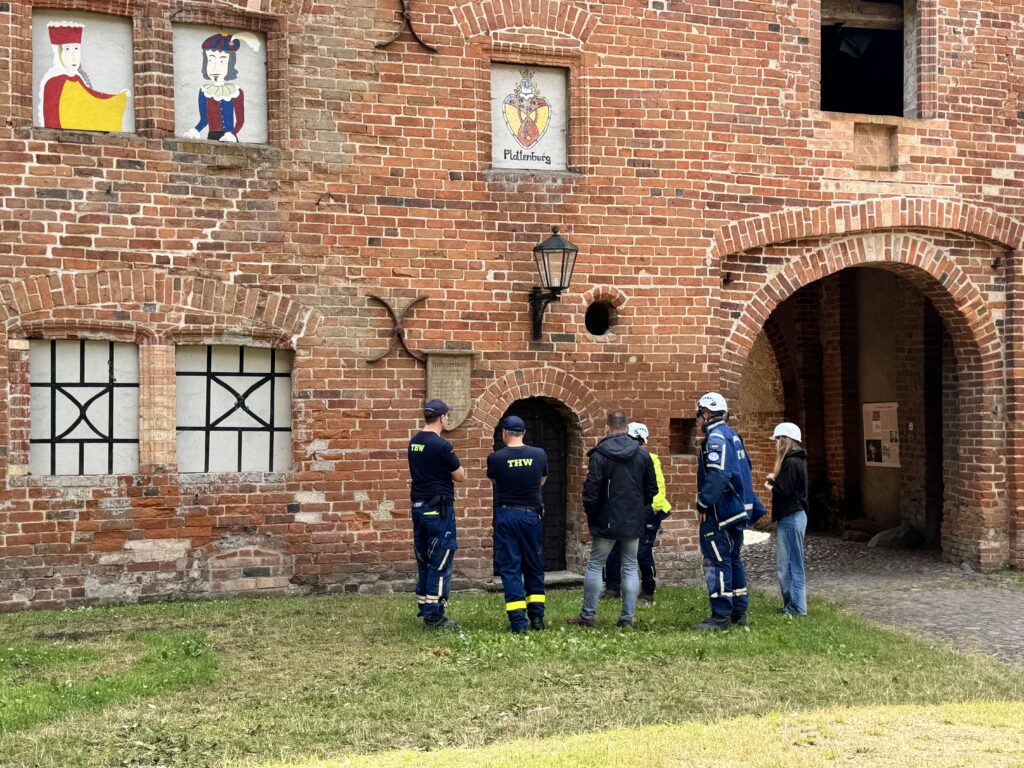
From 23 to 26 June 2025, volunteers from the Immovable Cultural Assets (ICA) unit gathered in Prignitz to undergo practical training in emergency documentation and the initial securing of buildings, led by the KulturGutRetter team. Thirteen team members from the interdisciplinary ICA unit, consisting of civil protection and cultural heritage experts, practised applying Minimum Standard Procedures (MSPs) and tested their equipment on two listed buildings: Mesendorf Castle and Plattenburg Castle near Perleberg. They were supported by a structural engineer and a liaison officer from the THW. The role of a cultural heritage advisor was also incorporated for the first time in a simulated initial inspection, which involved assessing stability, identifying potential sources of danger, and addressing structural issues.
Photo: T.Busen, DAI
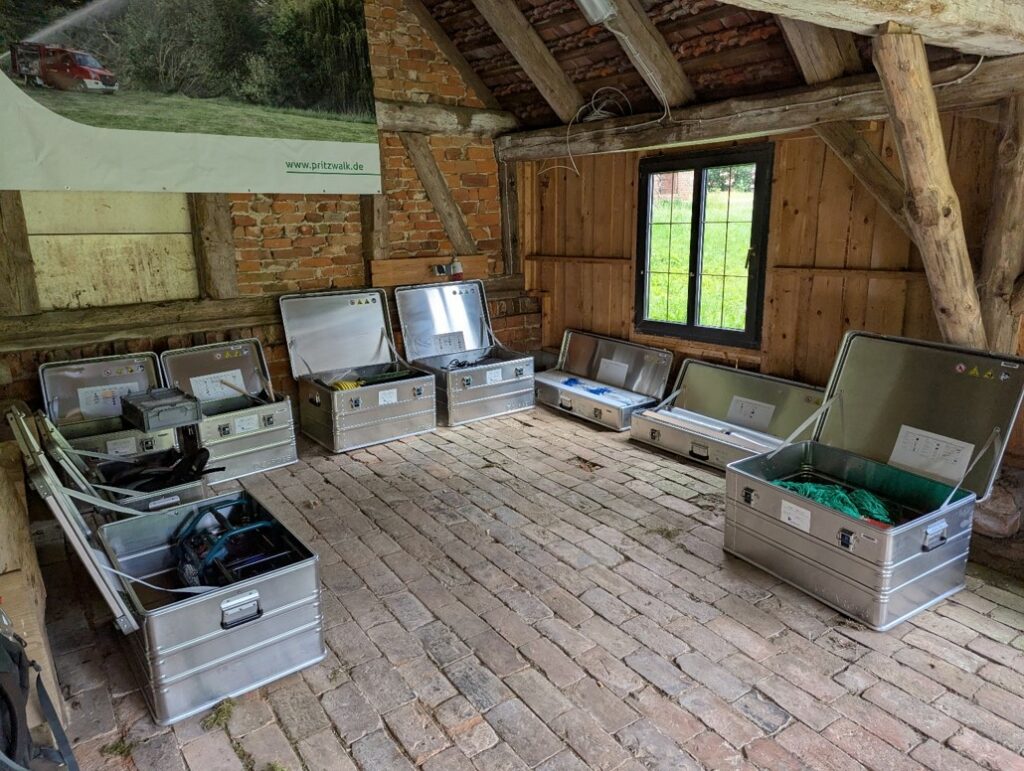
All of the equipment belonging to the ICA unit, which consists of 18 boxes on three pallets, was brought on site. The tools are organised in several groups, broadly corresponding to the ICA unit’s various tasks: general tools; cleaning and decontamination; securing materials; object stabilisation; stabilisation with plaster and masonry; emergency documentation; and climbing equipment. The exercises enabled the volunteers to familiarise themselves with the tools and assess their suitability for the required tasks.
ICA equipment. Photo: T.Busen, DAI
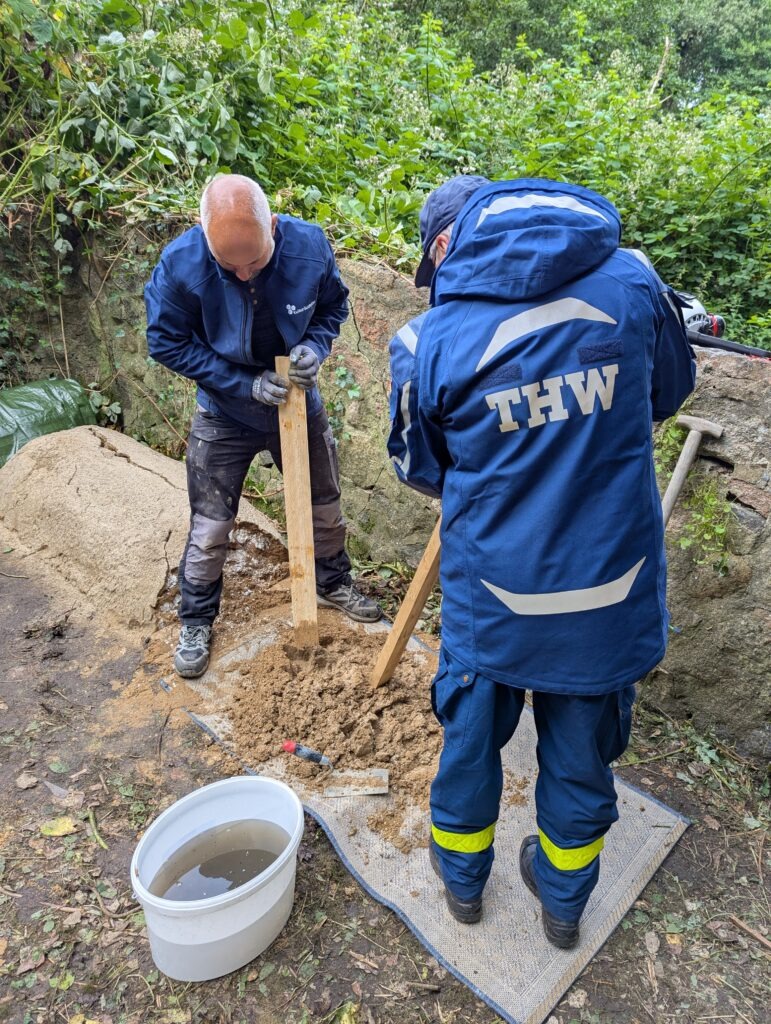
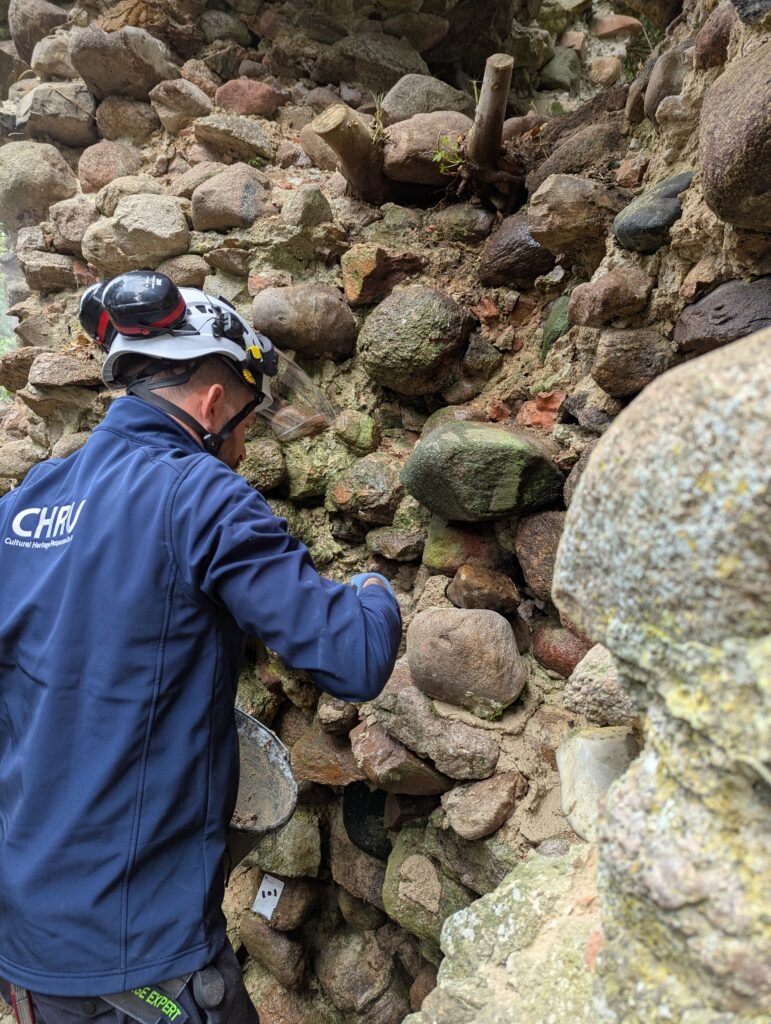
The training focused on rapid emergency documentation and damage assessment and evaluation, as well as the implementation of immediate safety measures. Initially, the participants were divided into four teams: two teams were responsible for documentation and surveying, while the other two teams were responsible for damage assessment and the implementation of emergency safety measures. Using mini drones and laser scanning, precise 3D data of the Mesendorf castle ruins was generated for creating sections and orthomosaics. The unstable fieldstone walls were stabilised using a specially adapted lime-sand mortar and spiral anchors. Adding quicklime powder to the mortar ensured faster initial setting and increased its volume, accelerating the work processes and optimising the connection to the historic masonry. This enabled larger sections of the ruins to be secured within two days.
Preparation and application of lime mortar. Photo: T. Busen, DAI.
An exploration team inspected the Plattenburg miners’ house, carrying out an initial risk assessment and evaluating its stability. Meanwhile, a documentation team took measurements at fixed points on the façade to enable monitoring of any movement or deformation of the building components.
Photo: S.Erhan, DAI
MCA specialist training in Hilden
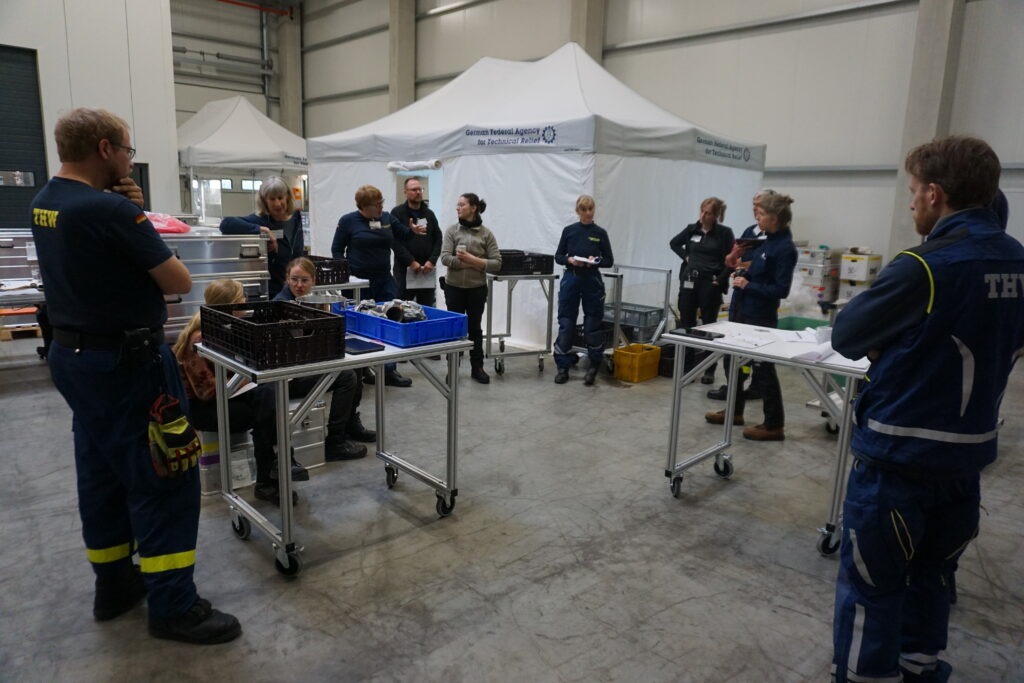
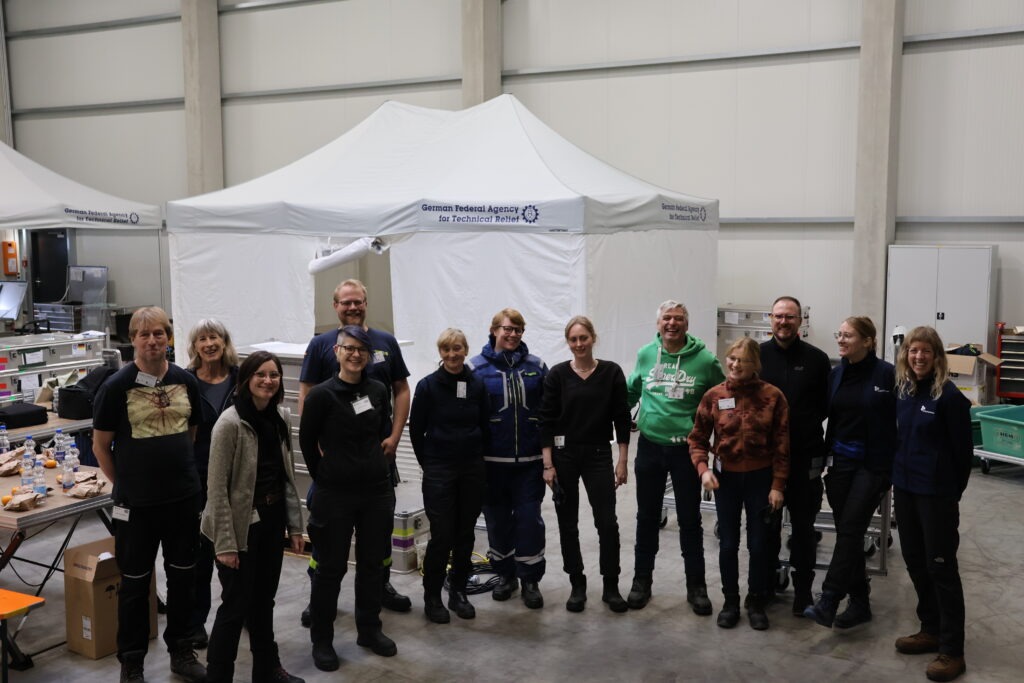
From 22 to 24 October 2025, LEIZA organised a specialist training course on the salvage and emergency conservation of movable cultural assets at the THW logistics centre in Hilden. Volunteers from the Movable Cultural Assets (MCA) unit were supported by the LEIZA team, an IT expert from the DAI, and THW logistics colleagues.
MCA specialist training at the THW logistics centre in Hilden. Photo: LEIZA
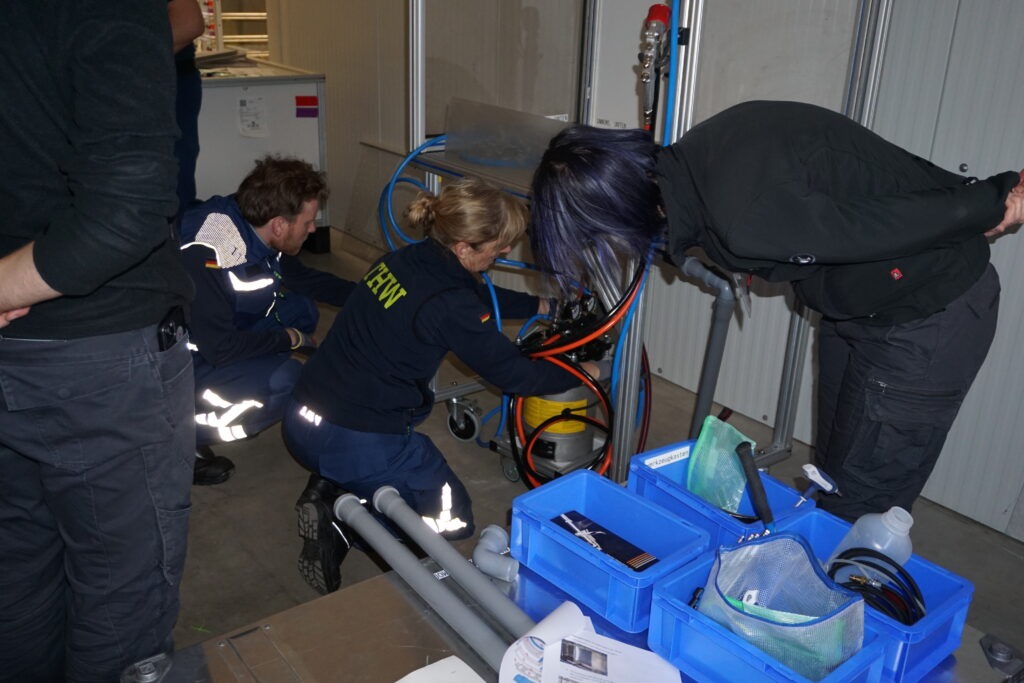
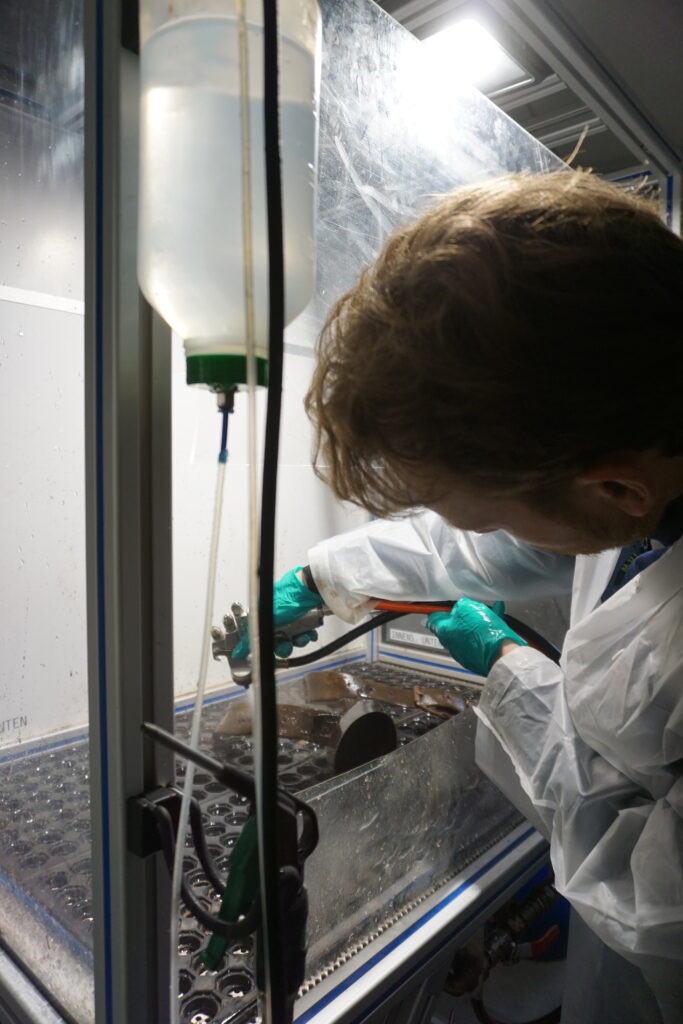
In the MCA area, the focus this year was on salvaging, cleaning and drying wet objects. Participants practised using the Q-Field app for digital documentation, as well as setting up and dismantling the wet cleaning module of the mobile emergency conservation laboratory. The latter process is quite complex due to the connection required for the air compressor and water showers.
Connection of the air compressor. Photo: LEIZA
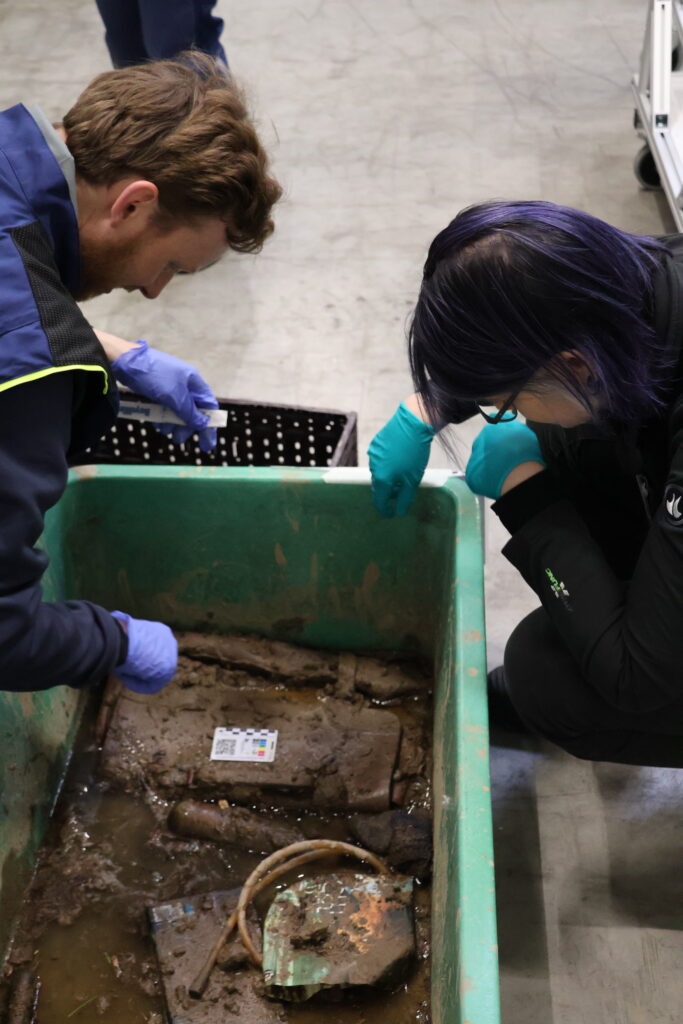
The behaviour of various materials was discussed and practised in three different scenarios – flooding (mud with water), fire with firefighting water damage (damp and soot) and burst water pipe (wet) – using the equipment available to the CHRU.
Asset recovery in mud and wet cleaning. Photos: LEIZA
The practical exercises were based on the teaching content provided in advance and the pocket calendar with minimum standards, among other things. The participants were highly motivated and engaged in a great deal of discussion, exchange, experimentation and summarising. Experience gained from this specialist training shows that exchange in particular leads to improved collaboration between emergency services and volunteers.