The CHRU’s Immovable Cultural Assets Unit trains in Mesendorf for the 2nd time
The CHRU’s Immovable Cultural Assets Unit trains in Mesendorf for the 2nd time
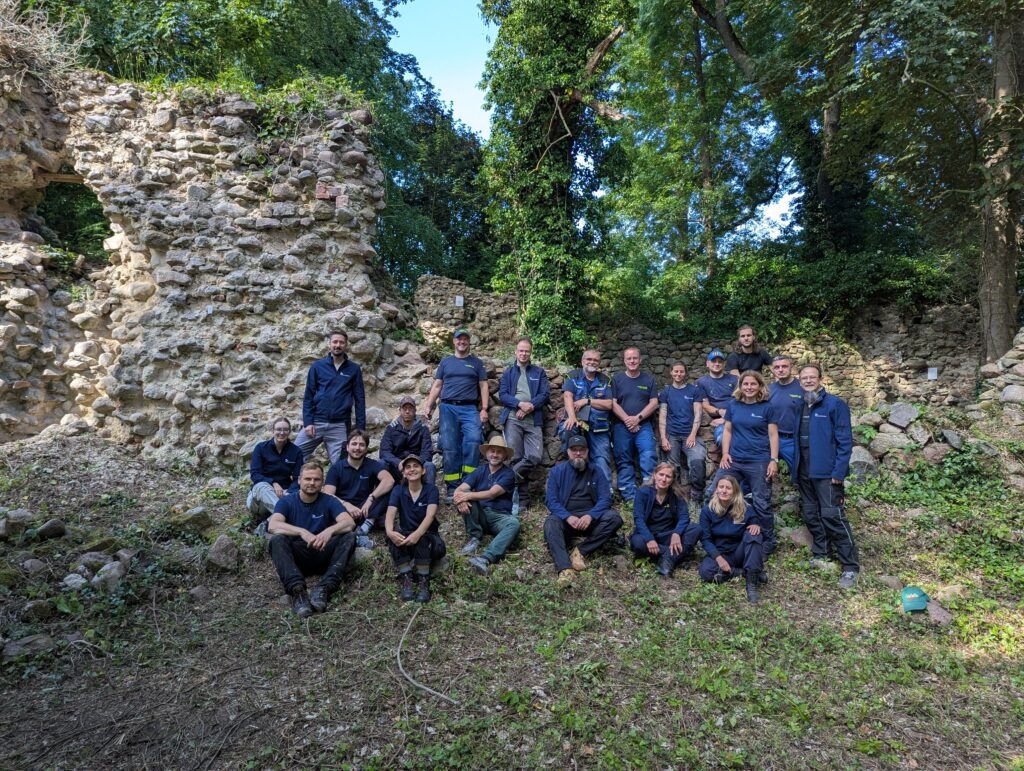
In June 2026, the second practical specialist training course on built heritage as part of the KulturGutRetter project took place in Mesendorf, Brandenburg. A total of 16 KulturGutRetter volunteers and THW personnel from the ICA (Immovable Cultural Assets) Unit came together for the course, which was led by a team from the DAI’s Architecture Division.
Over several days, they were able to practise standard procedures for emergencies, train in workflows for the rescue of built cultural heritage, and apply these to an actual historic building.
The KulturGutRetter volunteers and the ICA team in Mesendorf. Photo: G. Thalmann
The historic ruins of Mesendorf Castle are situated on a peninsula in the estate grounds of the village of the same name in Prignitz. The towering remains of the rectangular structure, built of fieldstone and brick, now show clear signs of damage. In 2025, individual sections were temporarily secured as part of the first ICA specialist training course.
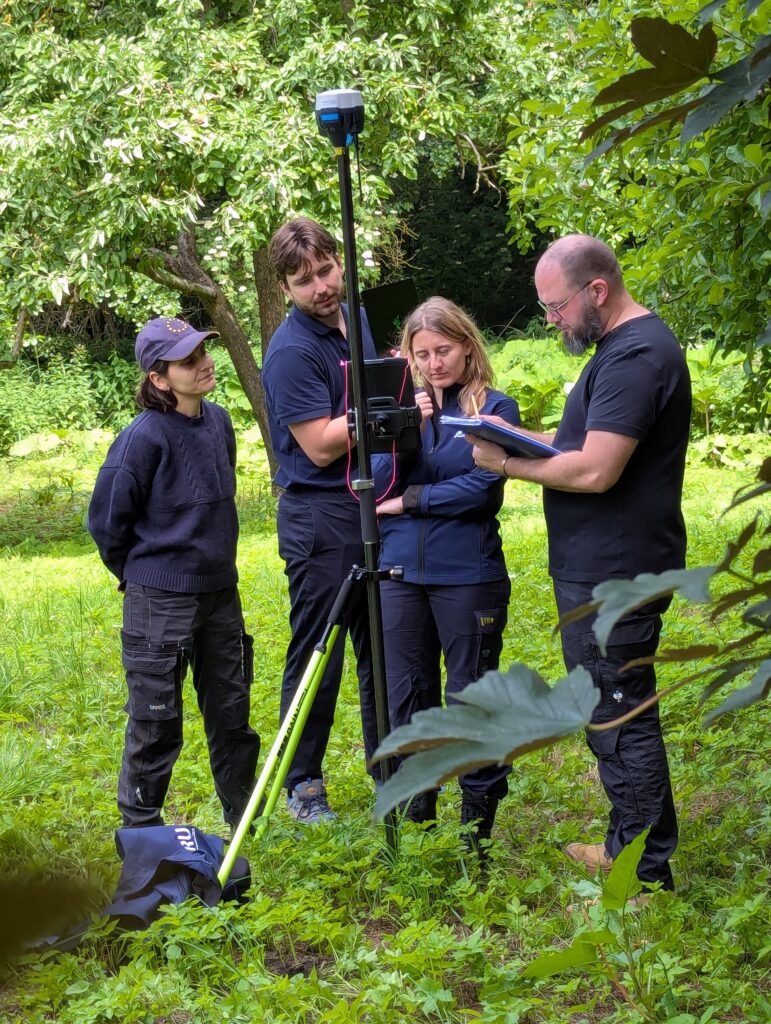
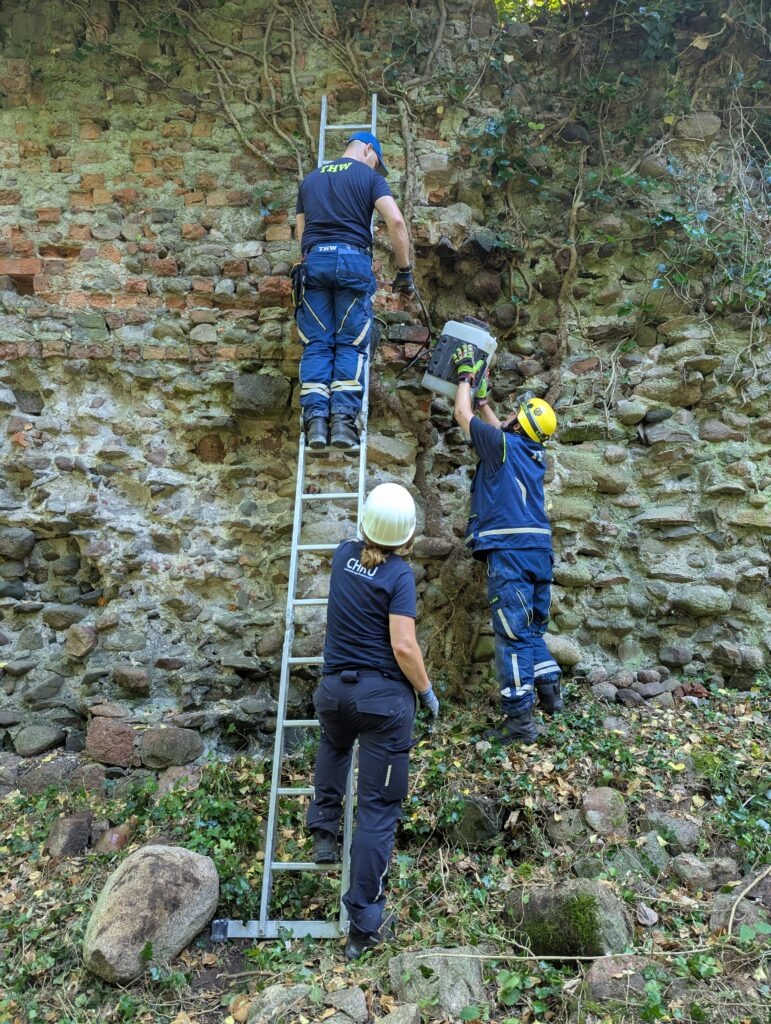
To begin with, the participants were divided into five teams. Several teams documented the castle ruins photographically, using surveying equipment and by creating three-dimensional models and point clouds, whilst other teams took turns assessing the damage and implementing the specific measures. Once the damage had been assessed, the baseline documentation completed, the survey carried out and the floor plans drawn up, stabilisation measures could be carried out in the prioritised areas of damage. These primarily involved backfilling loose sections of masonry, sealing cracks and installing supporting underpinning.
Surveying and stabilisation work on the castle ruins. Photos: T. Busen, DAI
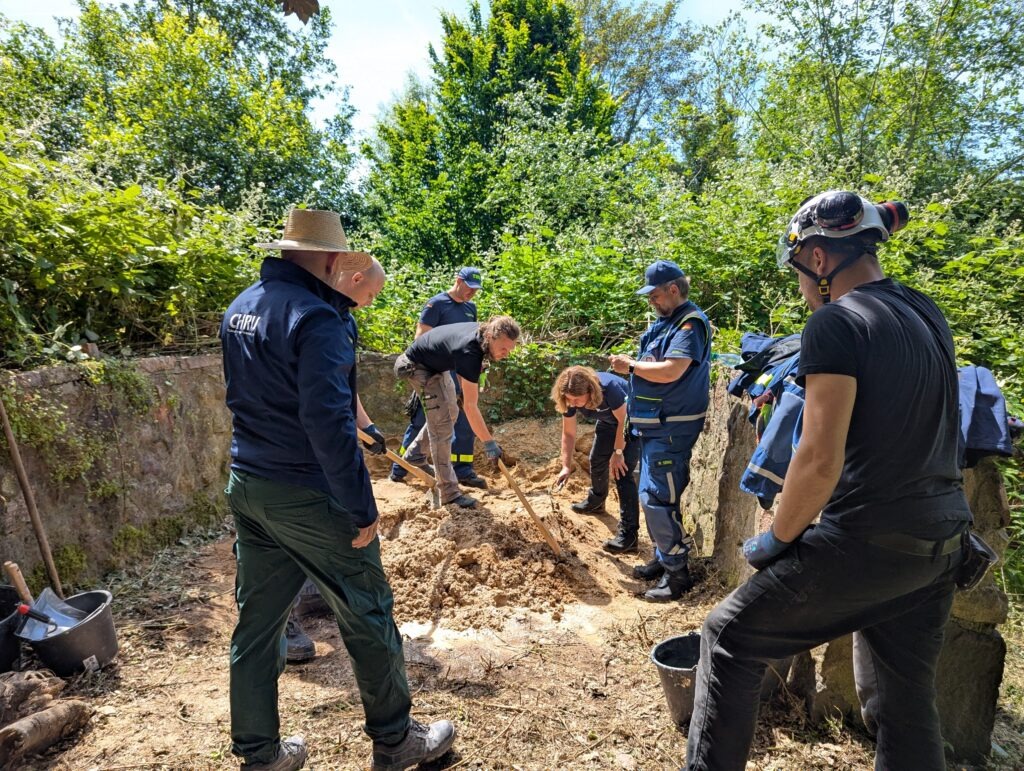
The material used for this was a so-called ‘dry-slaked’ sand-lime mortar, which was historically used extensively. The mortar is layered like a sandwich using sand and burnt limestone, and then slaked in a bed of sand. The key feature here is that high heat and an ultra-alkaline environment are generated within the sand pile, which promotes the formation of water-resistant calcium silicate compounds. When the mortar is mixed, so-called ‘lime spatters’ – small agglomerates of lime – are also formed, which give the mortar self-healing properties, as has recently been demonstrated for Roman concrete.
For the stabilisation of ruins, the mortar is further modified with quicklime powder. This additive causes rapid setting and expansion, which is particularly advantageous for repairing cracks.
Preparing sand-lime mortar. Photo: T. Busen, DAI
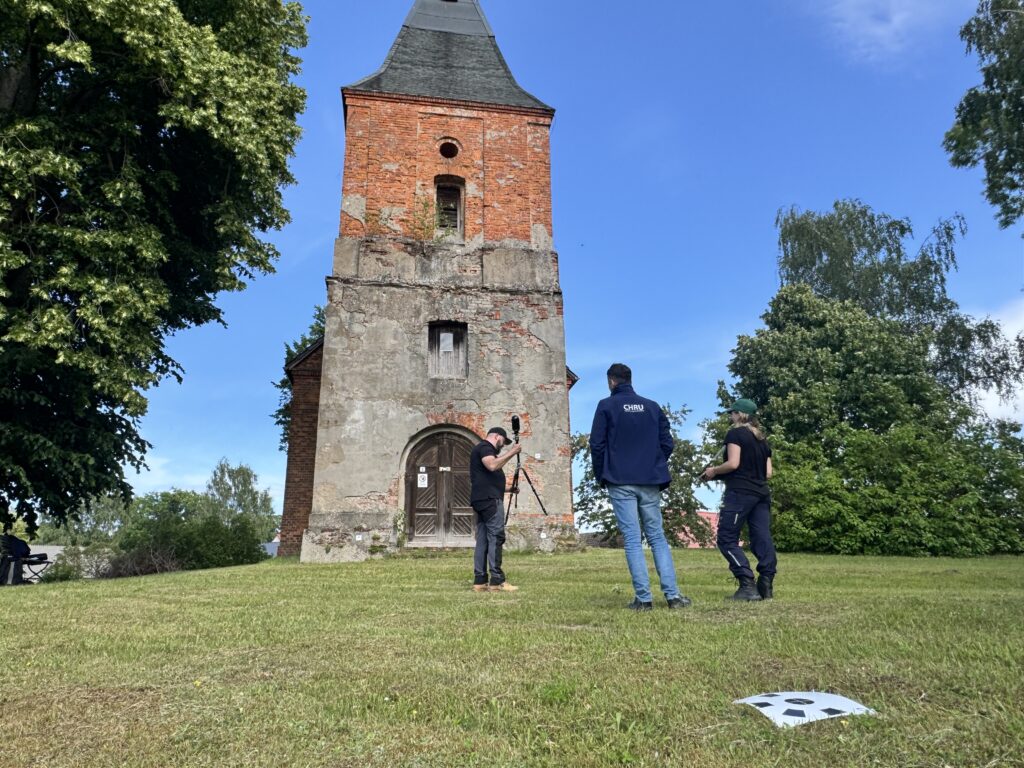
The second site was the village church in Mesendorf. The focus here was primarily on the 18th-century church tower. The tower, which had recently been closed to the public, had structural defects, which is why work was carried out exclusively on the exterior. In order to assess the damage high up in particular, several teams set up a surveying grid and flew a drone over the tower area. The damage was also documented and assessed.
Before any major physical work was carried out, the damaged area was digitally recorded using photographs and a 3D model, partly combining drone footage with handheld camera shots. The precise documentation of areas undergoing alteration is of particular importance for ensuring the traceability of the measures taken.
Documentation and assessment of damage to the village church. Photo: Sibel Erhan, DAI
In order to train more volunteers and enhance their practical experience, further specialist training courses in the field of immovable cultural heritage are planned for this year.