In 2025, the KulturGutRetter project continued the training of volunteer CHRU members that had begun in 2024 and further expanded the pool of volunteers. At the same time, national and international exchanges were maintained to promote the further integration of cultural property protection into civil defence.
Continuation of specialised training courses
Second interdisciplinary CHRU station-training
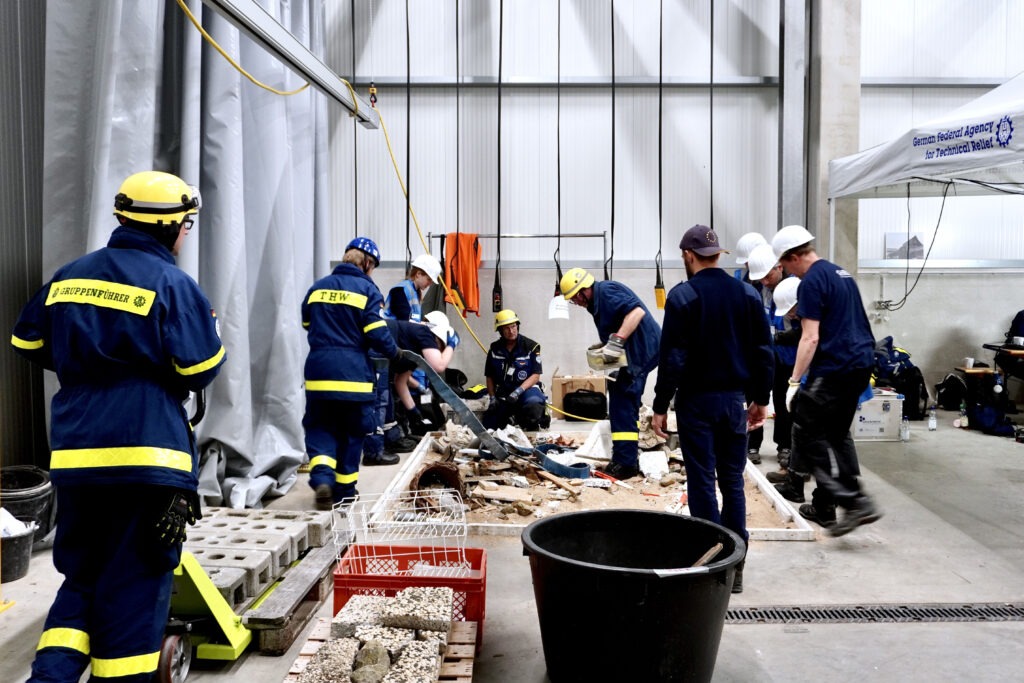
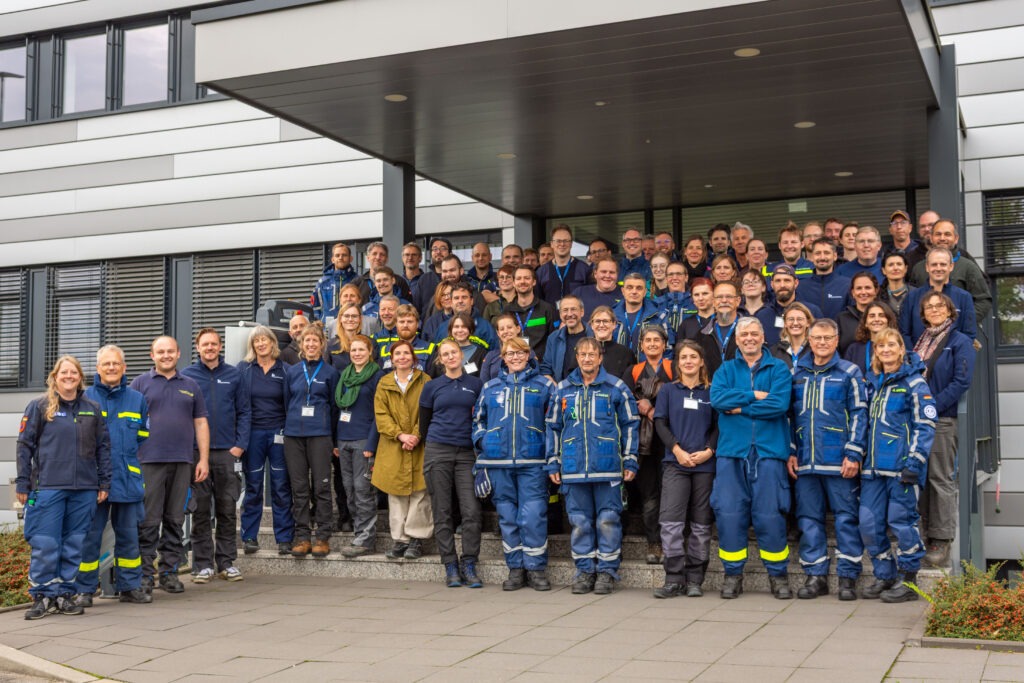
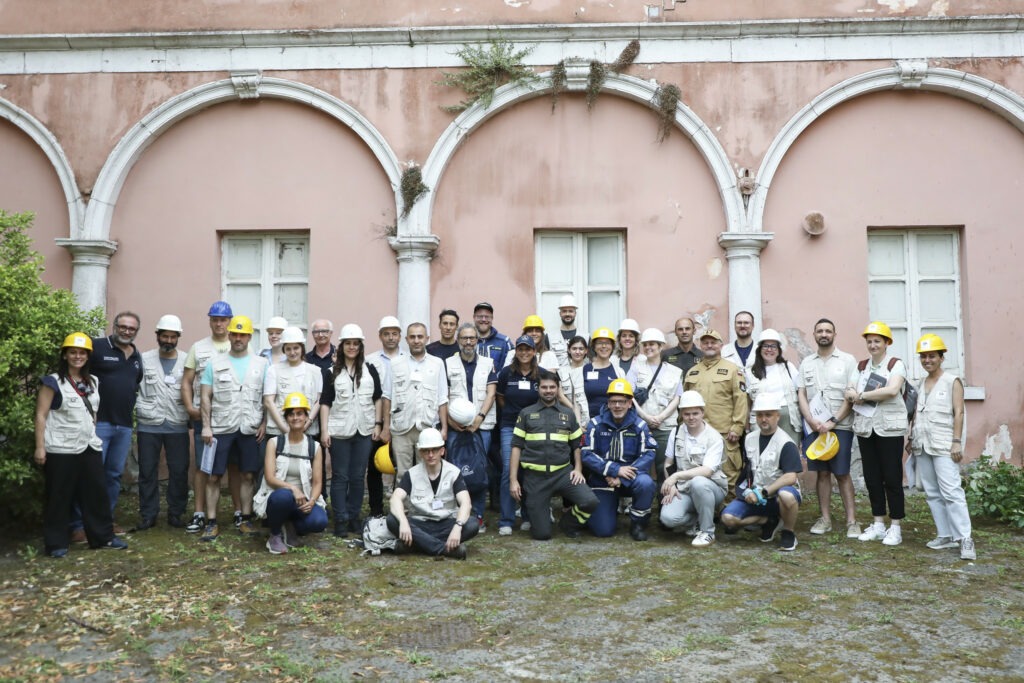
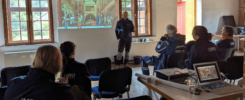
In September 2025, around 60 volunteers from the KulturGutRetter project underwent intensive training at the THW logistics centre in Hilden in preparation for international missions to protect cultural property in disaster situations. Organised by the DAI, LEIZA and THW, this was the second time the training had taken place, with former participants acting as trainers this time.
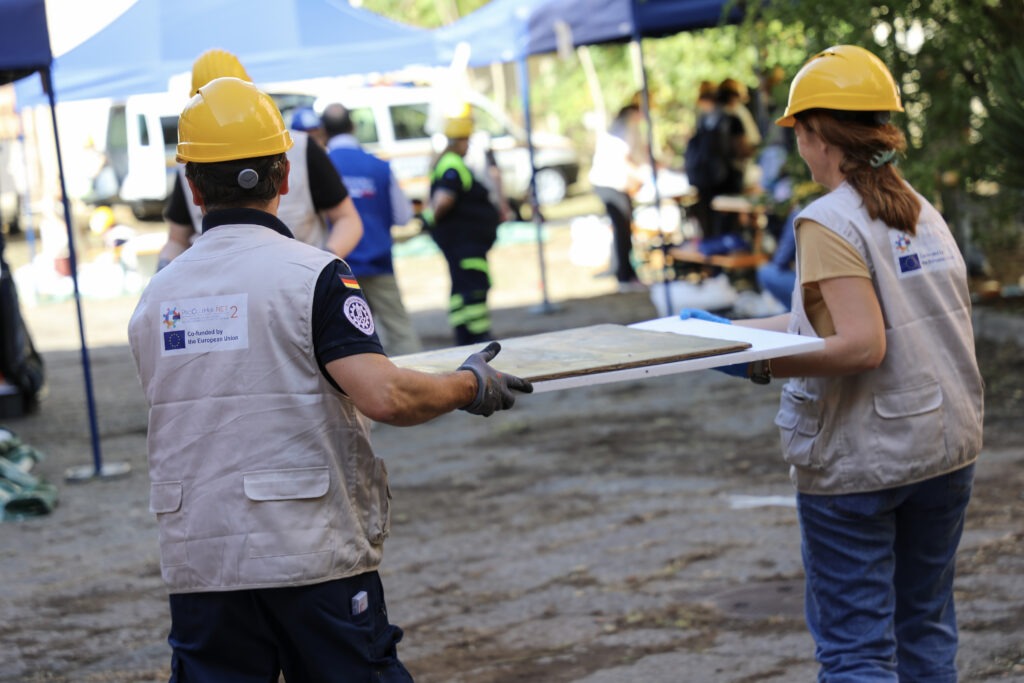
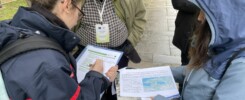
As part of their station training, team members learnt how to secure, document and preserve movable and immovable cultural assets in the event of a disaster. This involved carrying out exercises at the different stations of the mobile emergency conservation laboratory and learning to use modern surveying techniques, such as 3D laser scanning and GNSS, as well as a digital, GIS-based documentation system for recording and evaluating damage to buildings and objects in collections.
The practical programme also covered aspects of teamwork, for example in the context of rescue scenarios, thereby strengthening the vital communication between CHRU members. Upon completion of the training, the Cultural Heritage Response Unit (CHRU) now comprises around 130 operational specialists from fields such as architecture, archaeology, IT, conservation, and civil protection.
CHRU station training 2025, photo: D. Fleischer, DAI | Group photo, photo: Wiesner, THW
CHRU specialist training courses
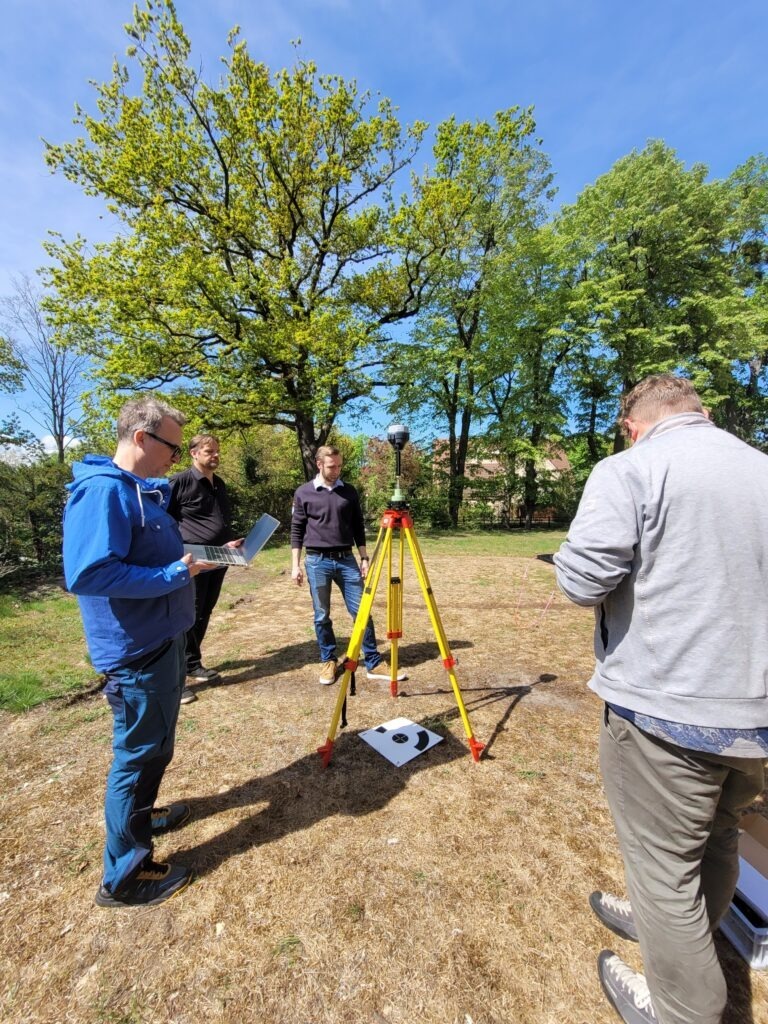
In 2025, specialist training courses in IT, built heritage and movable cultural heritage were offered for the first time as in-depth training programmes in smaller groups. It started in late April 2025, with a joint workshop held in Berlin for KulturGutRetter IT experts and THW ICT specialists. During the training, participants practised using the IT infrastructure for CHRU operations, built a network, and learned to use digital devices and the QField documentation system. They also tested measurements with GNSS receivers and conducted parallel data collection via extended network infrastructures. These results will be used to prepare a follow-up workshop on the final technical configuration.
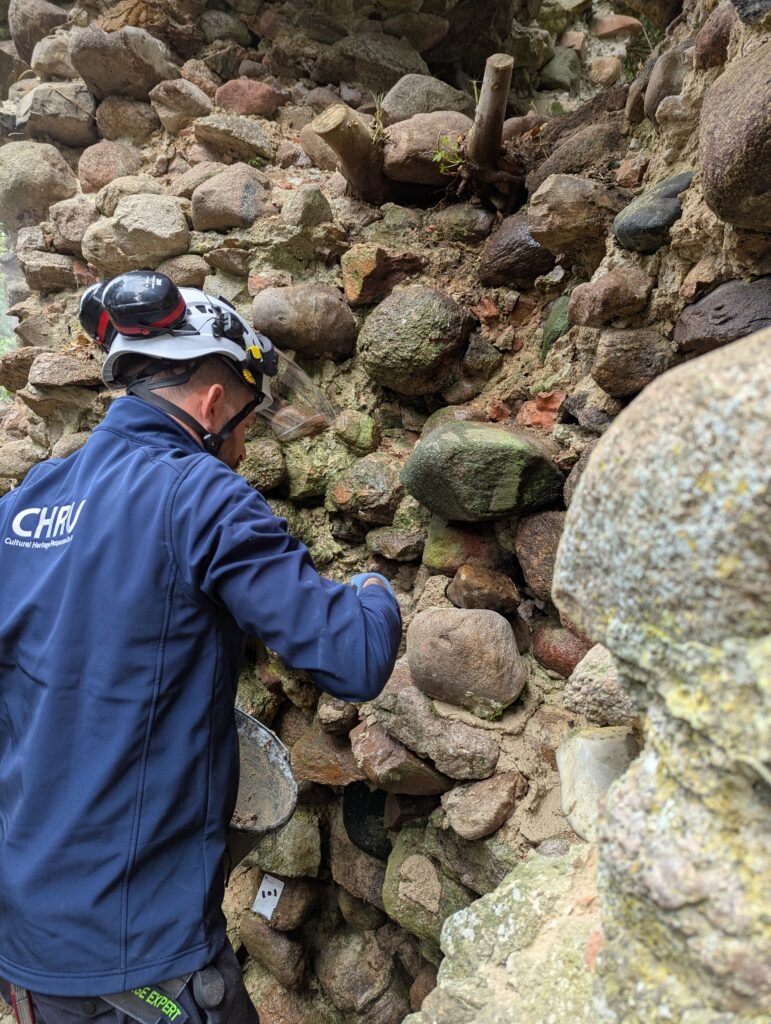
In June 2025, thirteen members of the CHRU unit ‘Immovable Cultural Assets (ICA)’ underwent training in Prignitz, under the guidance of the Division of Building Archaeology at the Head Office of the DAI, in the areas of emergency documentation and the initial securing of built heritage. At the Mesendorf castle ruins and Plattenburg near Perleberg, they tested the unit’s procedures, tools, and materials for rapid documentation and damage assessment. Precise 3D data was generated using UAVs and laser scanning, and unstable sections of wall were stabilised using modified lime mortar and spiral anchors. Additionally, a team at Plattenburg assessed the stability of part of a building and identified potential hazards.
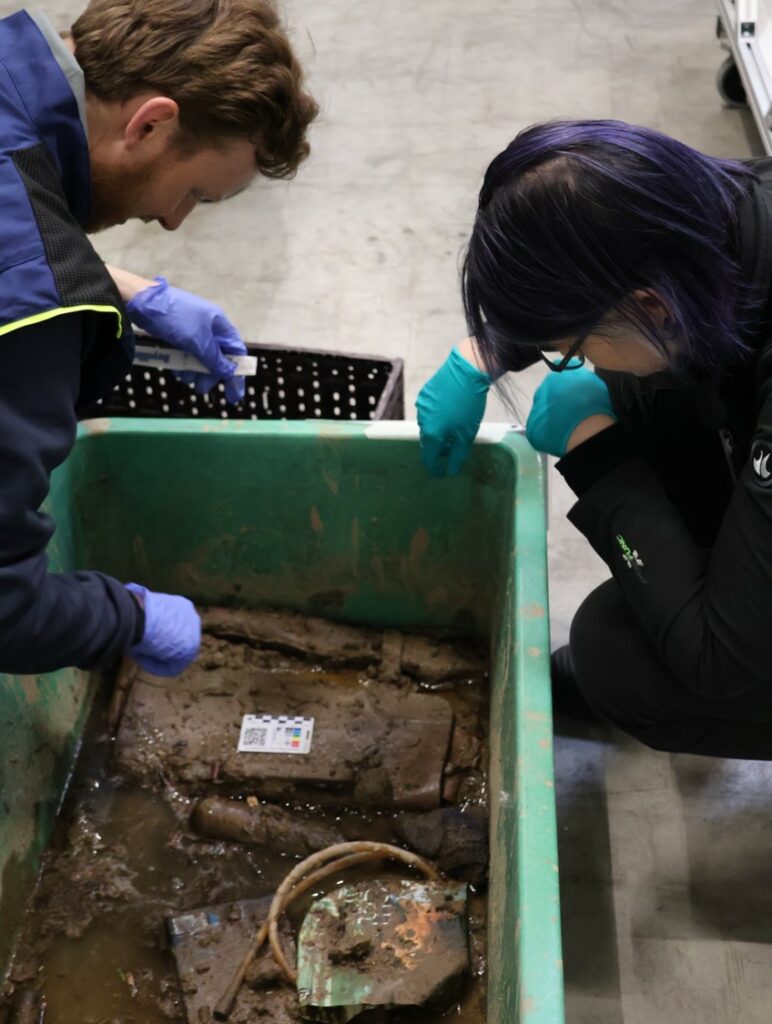
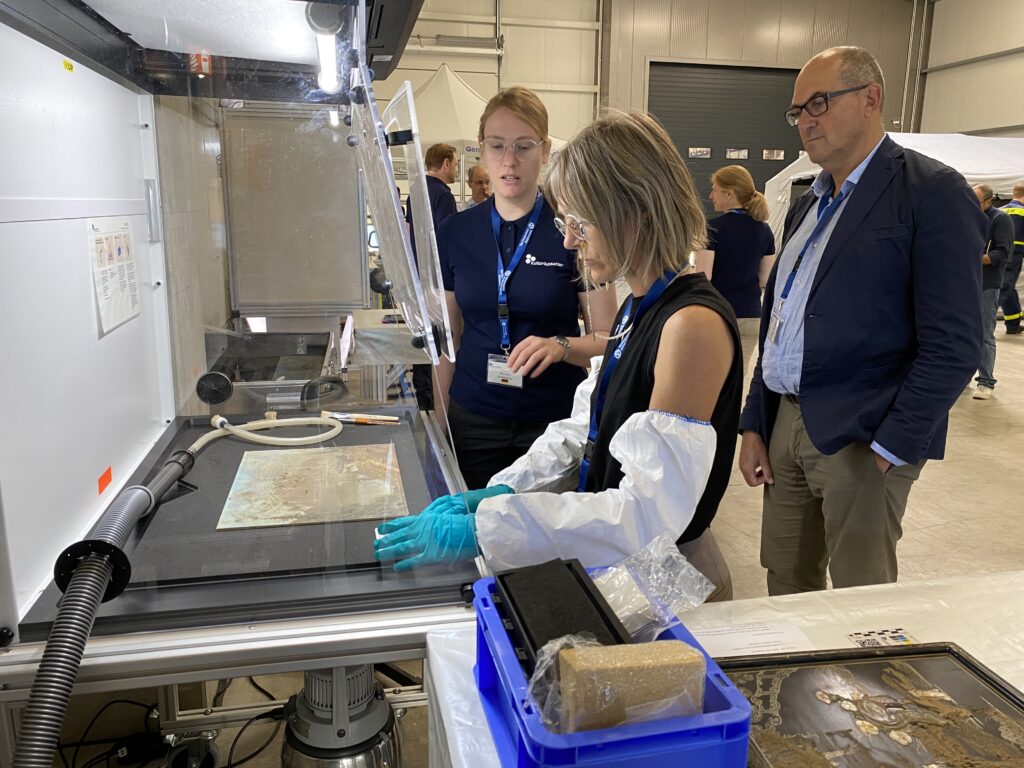
In October 2025, the specialist training course on the salvaging and emergency conservation of movable cultural assets took place at the THW logistics centre in Hilden. Led by LEIZA, volunteers from the CHRU Movable Cultural Assets (MCA) unit received training in the practical handling of wet and damaged cultural assets. The focus was on salvaging, cleaning and drying items, setting up the wet cleaning module, and creating digital documentation using the QField app. Various materials and equipment were used in scenarios involving flooding, fire and burst water pipes. This strengthened the collaboration between emergency services and volunteers through lively cooperation and professional exchange.
IT specialist training, photo: B. Fritsch, DAI | ICA specialist training, photo: T. Busen, DAI | MCA specialist training, photo: LEIZA
European training courses
Two editions of the ‘Training Module on the Protection of Cultural Heritage at Risk’, organised by the EU project PROCULTHER-NET2, took place in Caserta, Italy, in June and September 2025. Eight CHRU volunteers from Germany participated: four civil protection experts and four cultural heritage specialists. Together with colleagues from other UCPM Member and Participating States, they expanded their knowledge of protection and emergency response in crises in order to prepare for missions within and outside Europe. The practical training, based on the updated Key Elements of a European Methodology, covered the phases of activation via the EU Civil Protection Mechanism (UCPM), as well as operational challenges such as the temporary storage of cultural property. Particular emphasis was placed on securing immovable heritage, protecting movable heritage (including books and archives) and assessing damage to intangible cultural heritage, through practical exercises.
PROCULTHER-NET2 Training in Caserta, Italy | Photos: DPC, PROCULTHER-NET2
EXCHANGES AT NATIONAL AND INTERNATIONAL LEVEL
National Workshop
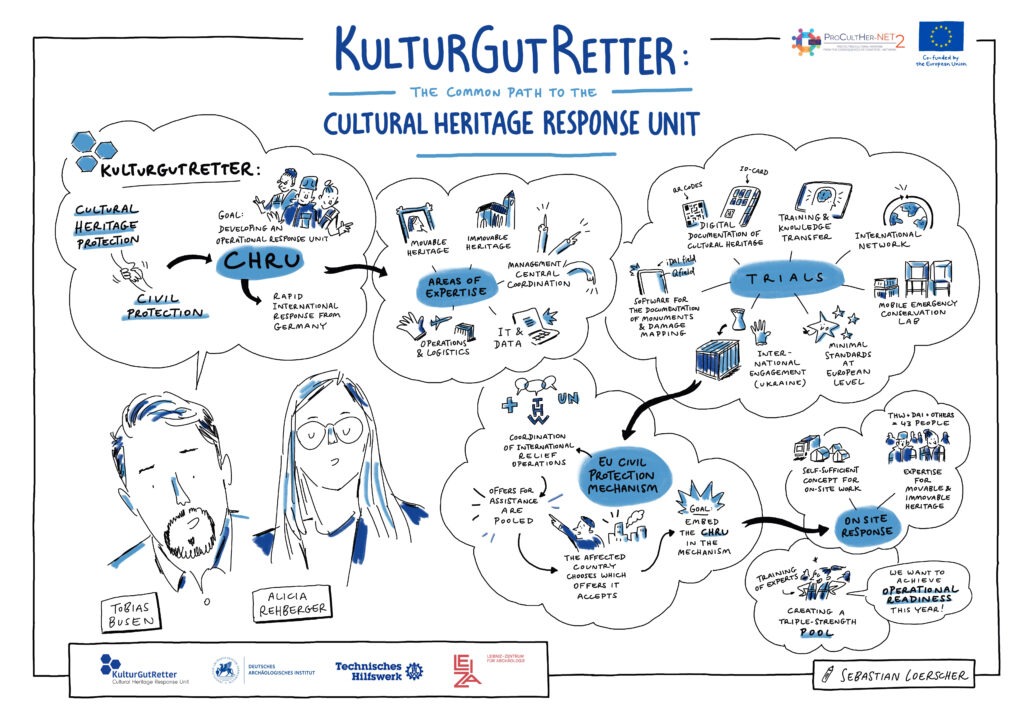
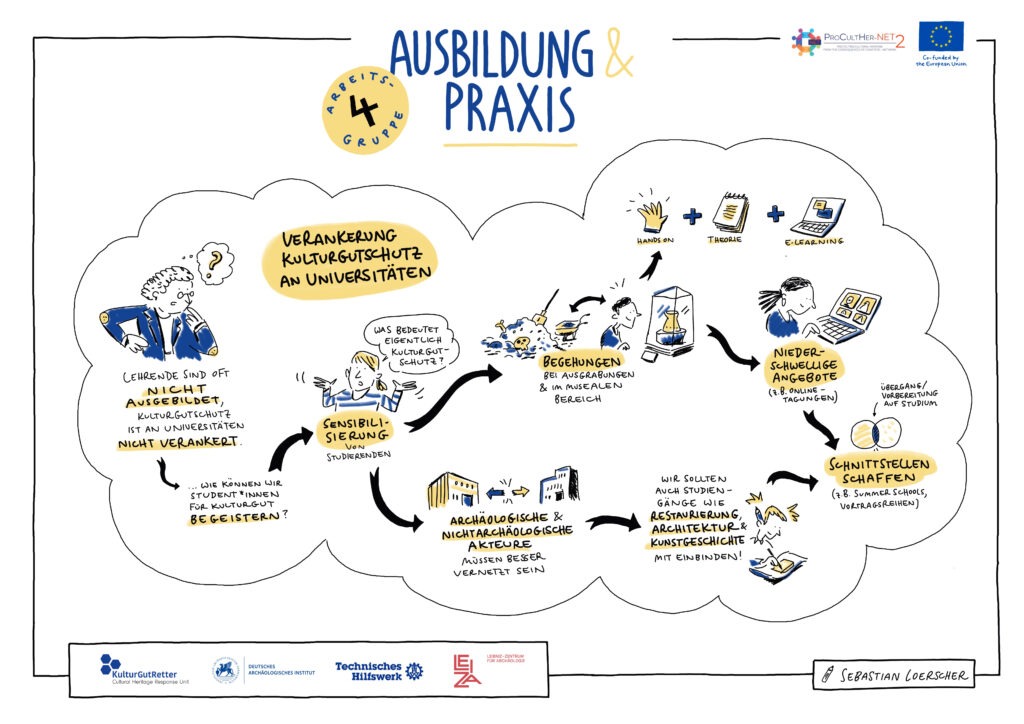
Over 5 years after the last KulturGutretter-Workshop, a two-day online workshop, ‘Yesterday-Today-Tomorrow: Where does cultural heritage protection stand in 2030?‘ took place in April 2025. Organised by the DAI, it was supported by THW and LEIZA. As part of the EU project PROCULTHER-NET2, the workshop brought together over 50 experts from German institutions in cultural heritage and disaster management to share experiences, evaluate current developments, and discuss future crisis management strategies.
On the first day, representatives from Italy and Germany presented European and national approaches to the protection of cultural property, including the KulturGutRetter project and the Federal Office for Civil Protection and Disaster Relief’s (BBK) Federal Film Preservation Programme. Working groups then discussed challenges relating to mobile and immobile heritage, as well as IT and data management.
On the second day, the focus was on practical cooperation between emergency networks and emergency services, as well as the common standards of the Leibniz research museums and the ‘Cultural Heritage Emergency Response Manual‘ published by the Association of Restorers (VDR). Other groups discussed topics such as training, ethical guidelines, knowledge exchange, and working with volunteers.
The workshop strengthened the national network, promoted understanding between specialist areas, and encouraged closer integration between cultural heritage and disaster control.
Images: Sebastian Lörscher
Presentation of the CHRU’s equipment to European partners
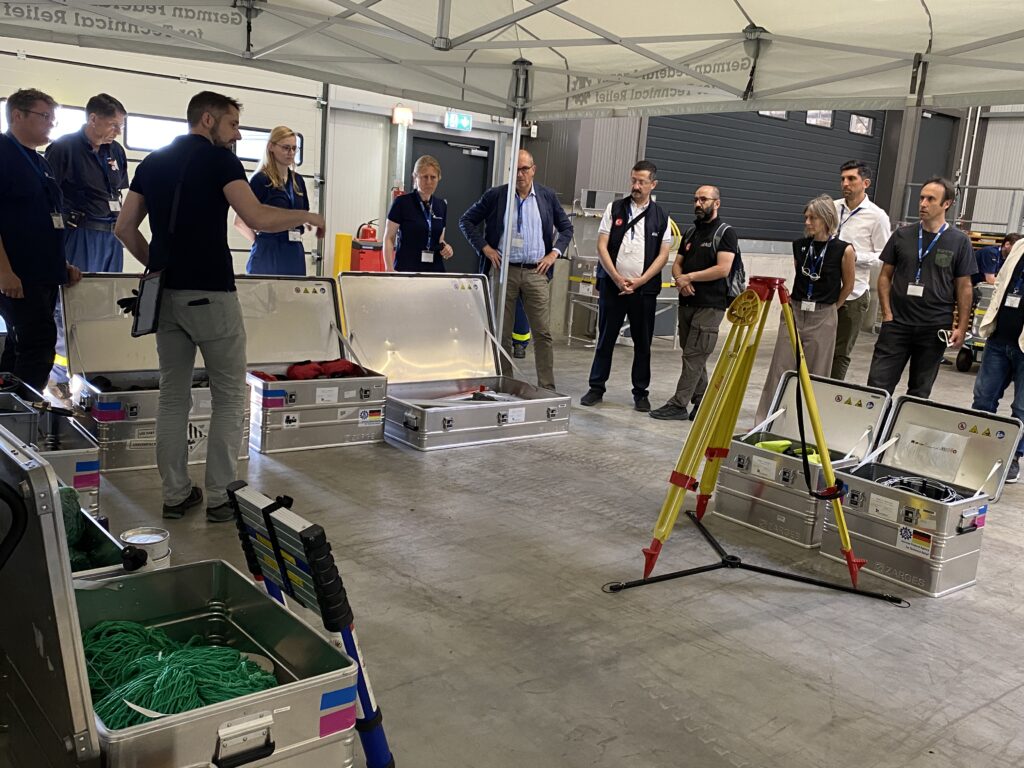
In early July 2025, the KulturGutRetter partners presented equipment specially developed for the CHRU to support the emergency supply of cultural assets following disasters. They presented this equipment to the PROCULTHER-NET2 project partners at the THW logistics centre in Hilden. Representatives from Italy, France, Turkey and Portugal travelled to the site for this study visit, where they examined the equipment in detail and learned about its functionality.
The presented equipment comprises several components, including logistical elements for self-sufficient accommodation and operational management of the CHRU; special equipment for initial care of built heritage, including 2D and 3D documentation measuring devices; and tools for cleaning, stabilisation, emergency conservation, and dismantling damaged components if necessary. There is also a modular, mobile emergency conservation laboratory for mobile cultural assets, where collection and archive material can be registered, cleaned and documented. Additionally, there is hardware and software for fully digital operational documentation, where affected objects, damage patterns and emergency measures taken are systematically recorded. The guests emphasised that the CHRU equipment is unique in Europe and could serve as a model for similar structures in their home countries.
Presentation of the CHRU equipment in Hilden. Photos: C. Domenech, DAI
Participation in events and conferences
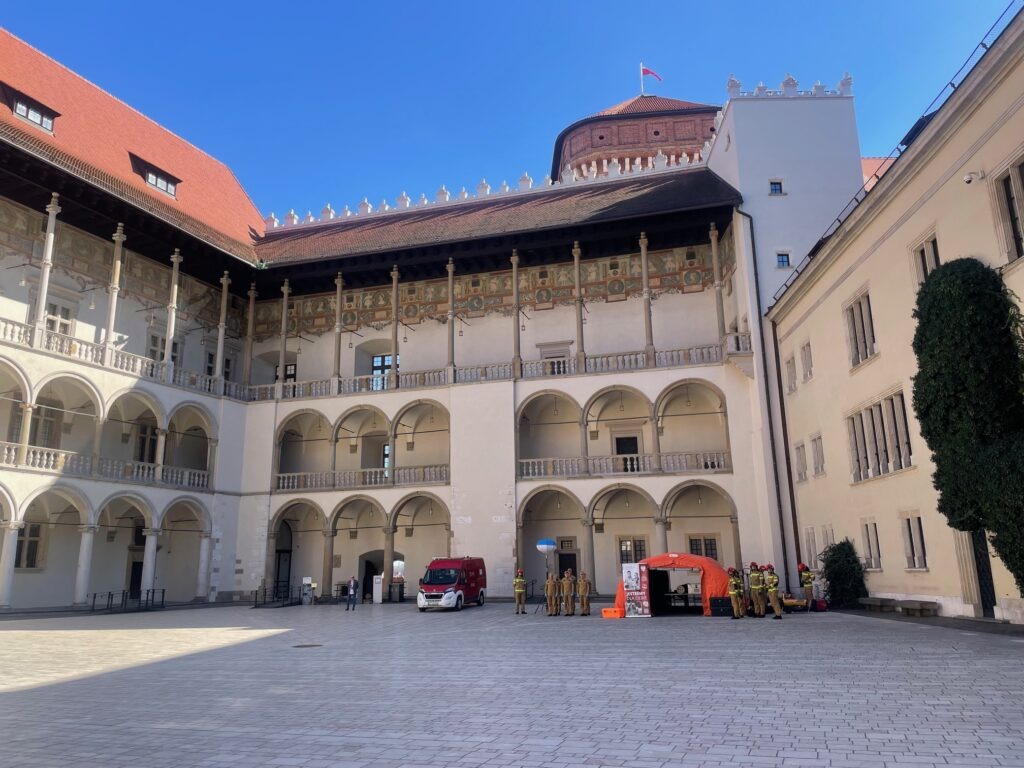
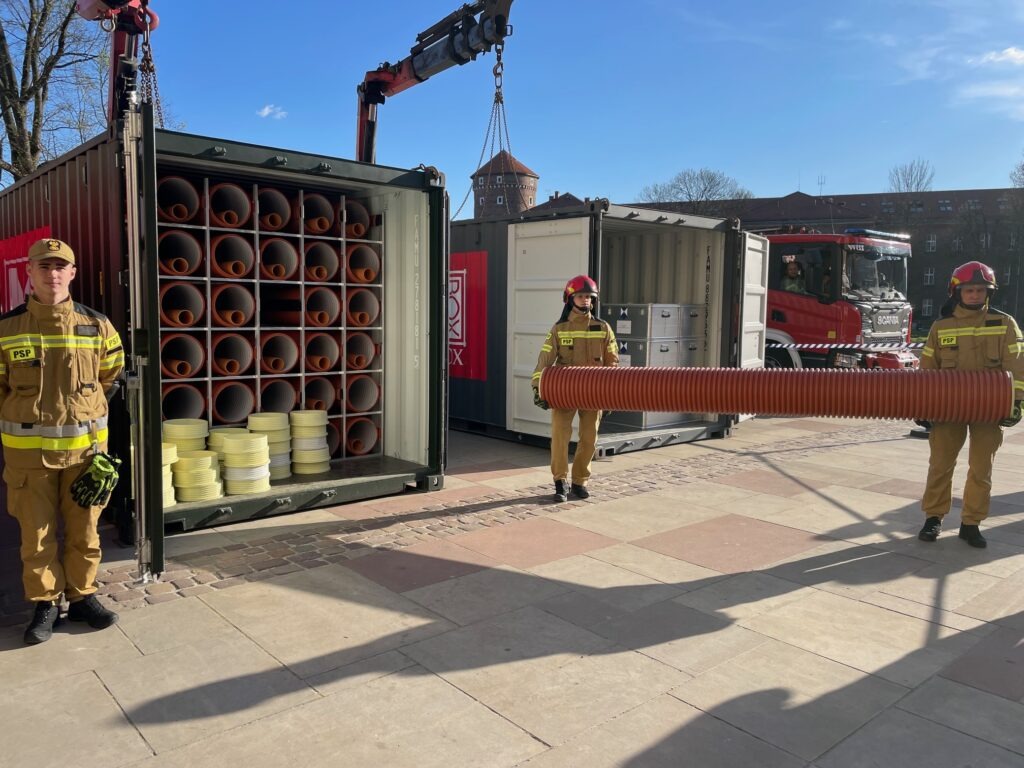
From 3 to 4 April 2025, the international forum ‘Safe Cultural Heritage: European Challenges in Times of War and Crisis‘ took place in Krakow. Organised by the Polish Ministry of Culture and National Heritage and the Ministry of the Interior and Administration, it brought together European experts to discuss the challenges of protecting cultural heritage in times of crisis, war, and hybrid threats. The DAI and THW attended on behalf of the KulturGutRetter project. Expert sessions covered topics including information security threats to cultural institutions, the role of intangible heritage in European security, liability in the event of deliberate attacks, and case studies of hybrid attacks in Finland, Estonia, Latvia and the Czech Republic. A particular highlight was the demonstration of evacuation procedures for the State Art Collections of the Wawel Royal Castle. These procedures include training, special evacuation equipment, innovative solutions for tapestries, staff training and videos.
Evacuation measures for cultural assets in the Wawel Royal Castle, Krakow. Image: C. Domenech, DAI
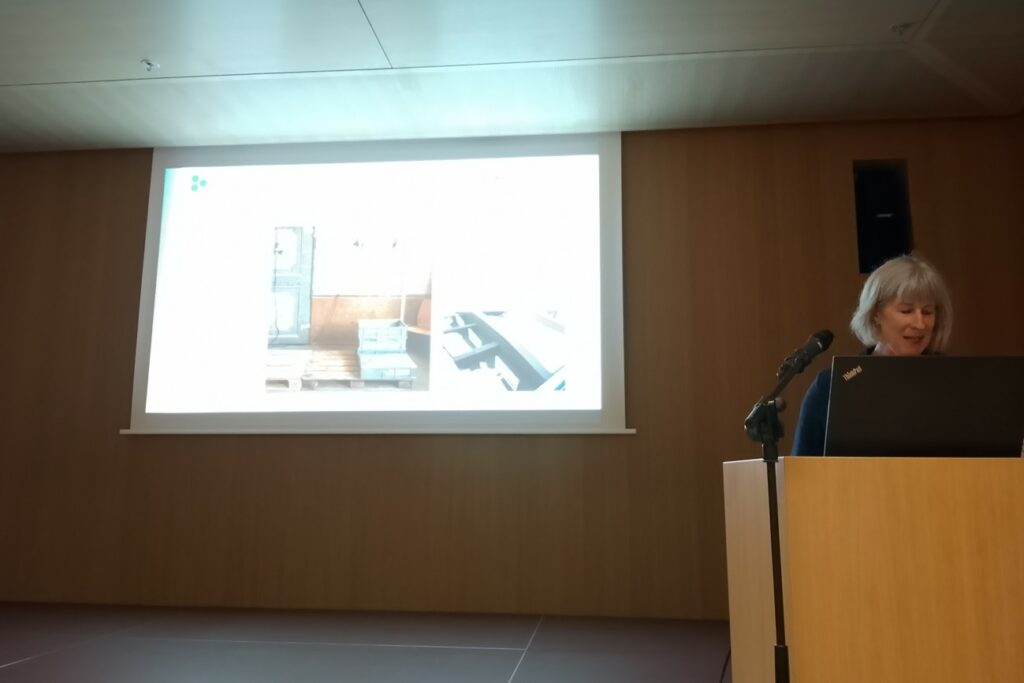
At the annual meeting of emergency response alliances in Darmstadt in June 2025, the KulturGutRetter project’s latest stage of development was presented. This included an optimised version of the mobile emergency conservation laboratory, which was developed based on feedback from training and exercises in 2024. The laboratory features modules for tasks such as photography, wet and dry cleaning, and packing. The meeting, supported by BBK, promoted networking and discussed evacuations, safe havens, and hybrid threats, with the aim of establishing common standards.
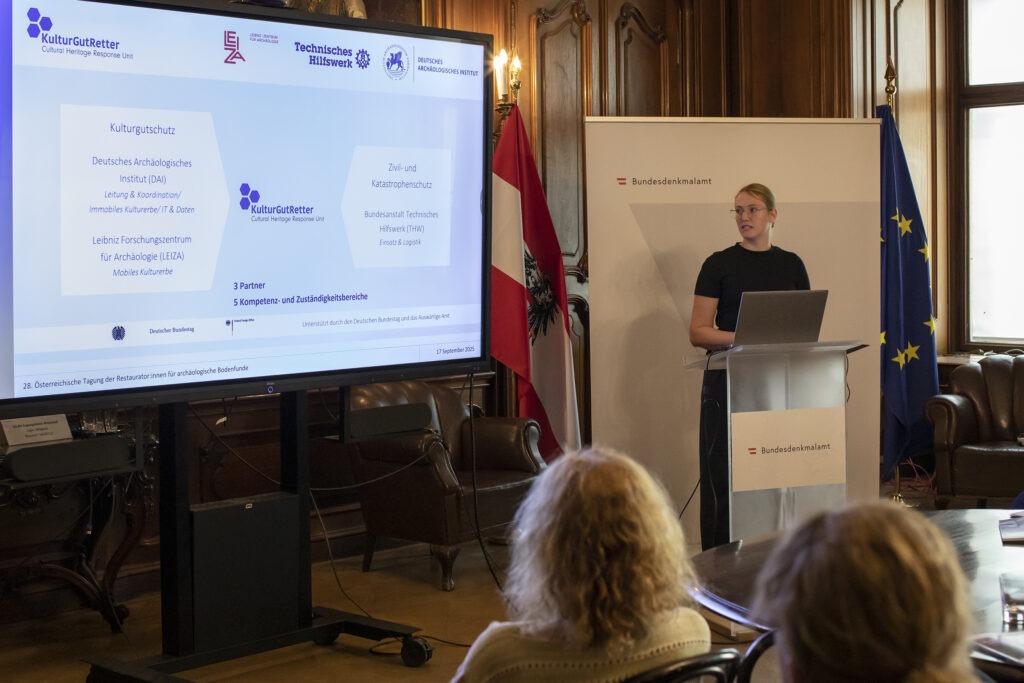
In September 2025, the mobile emergency conservation laboratory was presented at the 28th Austrian Conference of Restorers of Archaeological Finds in Vienna. Also in September, the CHRU was presented as part of a study day on emergency management in archives, organised by the Spanish National School of Civil Protection in collaboration with the Ministry of Culture.
Lecture in Darmstadt, photo: C. von Bieberstein, DAI | Lecture in Vienna, photo: Austrian Federal Monuments Office.
PROCULTHER-NET2 Technical Bulletins
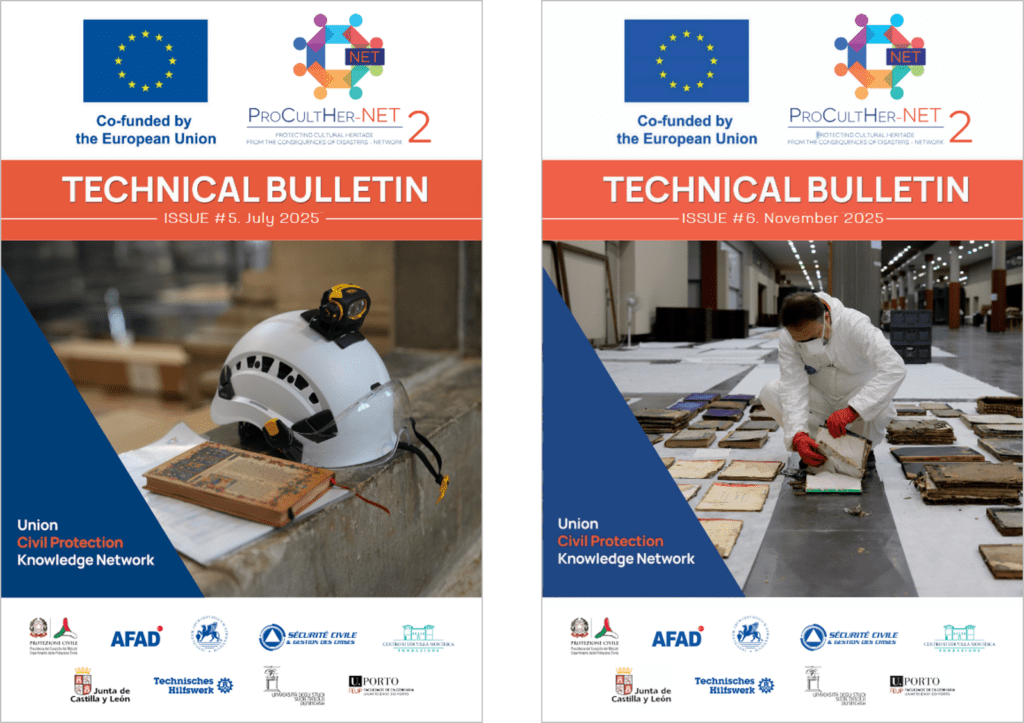
As part of the PROCULTHER-NET2 project, the DAI is working alongside colleagues from the Italian Civil Protection Agency to compile and publish the biannual “Technical Bulletins”. Two new issues were published in 2025.
This publication focuses on the protection of cultural heritage in disaster situations and contains reports on the experiences of experts in cultural property protection and civil protection/disaster management. Among the other insightful articles, you will find an article on the Cultural Heritage Response Unit (CHRU), co-authored by the DAI and THW, on page 21 of Technical Bulletin No. 5.
Previous issues of the Technical Bulletins can be found here: